Reviewed and signed off by Heat365| Published 29 September 2026 | Last updated 29 September 2026
Most people whose water leak claim gets refused assume the problem was that the leak was hidden. Usually it wasn’t. The Financial Ombudsman Service explains that home and buildings policies work by listing a set of “insured events” and then setting out exclusions, and that those exclusions often include damage that has happened gradually — sometimes called a “gradually operating clause”. Trace and access cover sits right on top of that line, and in our experience that is where claims are won or lost, not at the moment the leak is found.
In this guide
- What trace and access cover actually pays for
- The three things it almost never pays for
- Gradual damage: the exclusion that decides most claims
- The order of events that protects your claim
- What a leak detection visit actually involves
- Limits, excess and claiming twice
- Landlords, flats and shared buildings
- Frequently asked questions
What Trace and Access Cover Actually Pays For
Trace and access is not a separate policy you buy. It is a clause inside buildings cover, and it exists because finding a leak can cost more than fixing it. A joint weeping behind a tiled wall might need £40 of fittings to repair and a full day of careful investigation to locate.
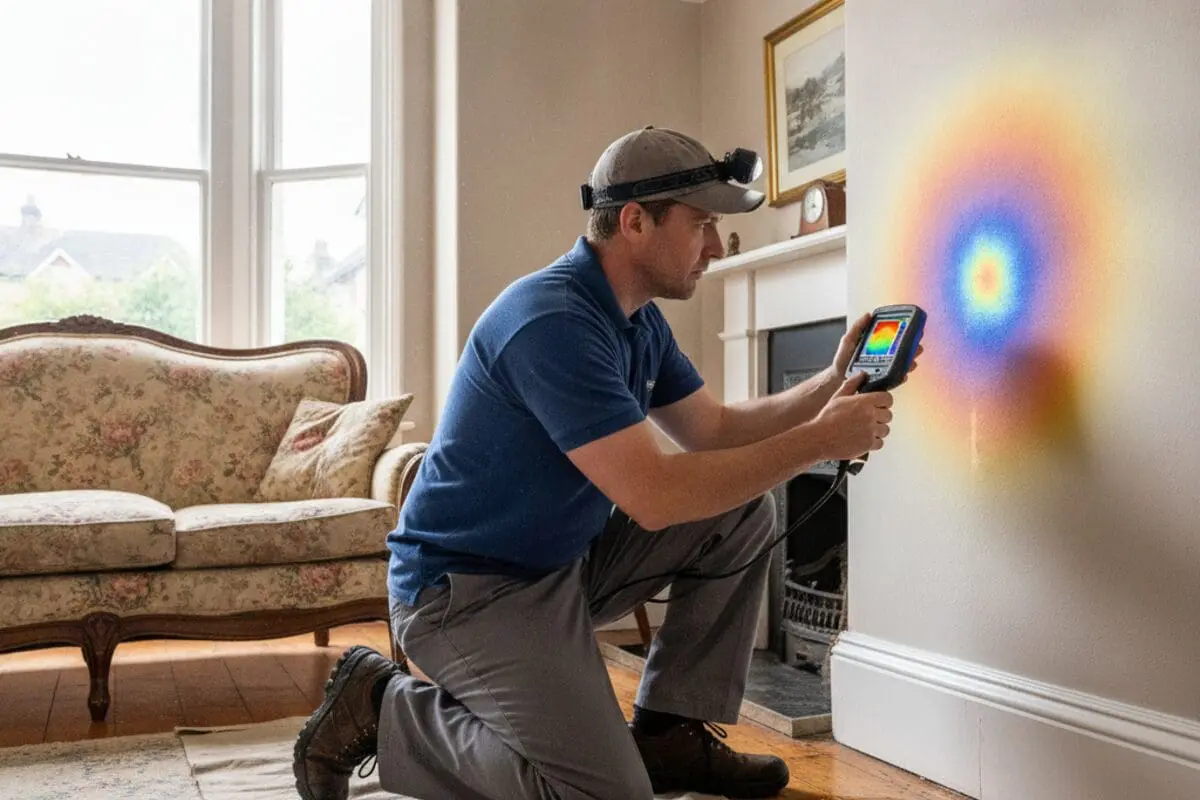
The clause typically covers three things. First, the specialist work to trace the leak — acoustic listening, thermal imaging, moisture mapping, tracer gas. Second, the destructive work needed to get at it, such as lifting floorboards, cutting tiles out or breaking into a screed. Third, making good afterwards: re-screeding, re-plastering, re-laying what had to come up.
That third element is the one homeowners forget exists. The Financial Ombudsman Service notes that buildings insurance covers the structure of the building along with permanent fixtures and fittings such as baths and fitted kitchens — which is exactly the material a leak search tends to destroy.
The Three Things It Almost Never Pays For
Trace and access has a narrow job. Three costs sit outside it far more often than people expect.
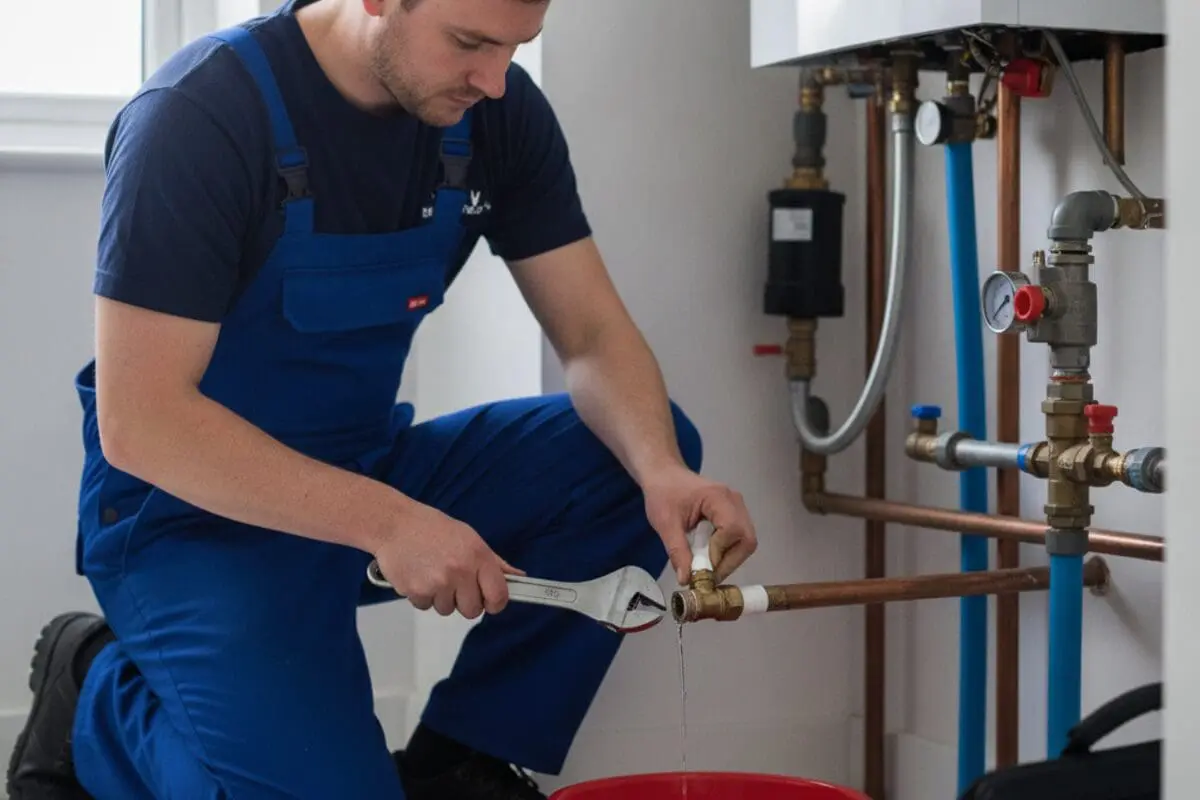
The repair to the pipe itself. Once the leak is exposed, mending it is normally treated as maintenance and falls to you. It is usually the cheapest part of the whole exercise, so this rarely causes an argument — but it does mean you will get a bill.
Damage caused by the water. That is a separate part of the claim under the escape of water section of your policy, with its own terms. Trace and access pays for the hole your engineer made; the escape of water section pays for the ruined ceiling below.
Anything the insurer did not authorise. This is the expensive mistake. If you instruct a company yourself, complete the work and then submit the invoice, you have removed the insurer’s chance to appoint its own contractor at its own rate. Some insurers will still contribute; some will settle only at what it would have cost them.
Gradual Damage: The Exclusion That Decides Most Claims
Here is the part most guides skate over. A hidden leak is, by definition, one that has been running for a while. That fact alone can push a claim into the gradual damage exclusion.
The Financial Ombudsman Service sets out the position plainly: policy exclusions often cover damage that happened gradually, and it hears from consumers who either dispute that the damage was gradual or say they had no way of knowing it was happening. It also confirms that where an insurer relies on an exclusion to refuse or reduce a payment, the Ombudsman will look at whether that exclusion has been applied fairly.
So the exclusion is not a brick wall. But it does mean the story you can tell about when you first noticed something was wrong carries real weight. A homeowner who reports a rising water bill in March and gets a leak found in April is in a much stronger position than one who noticed a damp patch eighteen months ago and left it.
The practical lesson: report early, and report the symptom even when you cannot name the cause. If you are not sure what you are looking at, our guide to the warning signs of a hidden leak will help you describe it accurately on the phone.
The Order of Events That Protects Your Claim
Getting the sequence right costs nothing and protects the claim. Getting it wrong is the single most common reason a genuine trace and access claim gets reduced.
- Stop the loss. Turn off the stopcock, or isolate the heating circuit if the loss is on the heating side. Take photographs before anything is moved or mopped.
- Read your schedule, not the brochure. Search the policy wording for “trace and access”. Note the limit and whether it is per claim or per policy year.
- Call the insurer before you call anyone else. Open the claim, get a reference, and ask directly: do you want to appoint a contractor, or may I instruct my own and submit the invoice?
- Get the answer in writing. An email or a claim note is enough. This is the document that settles a dispute six weeks later.
- Instruct a qualified engineer. Insist on a written report describing the method used, where the leak was found and what had to be opened up to reach it.
- Repair, then make good. Keep the invoices separate — trace, repair, make good — because they are paid from different parts of the policy.
If the leak is actively flooding and you cannot reach anyone, deal with the emergency first and document everything. No insurer expects you to sit and watch a ceiling come down while you wait on hold.
What a Leak Detection Visit Actually Involves
Non-invasive leak detection is not one technique, it is a sequence of them, chosen by what the building is made of and where the water is going.
| Method | What it finds | Best suited to |
|---|---|---|
| Acoustic listening | The hiss of pressurised water escaping a joint or pinhole | Mains and pressurised pipework under floors |
| Thermal imaging | Temperature differences where warm water tracks through structure | Heating circuits and underfloor heating |
| Moisture mapping | The wettest point in a wall or floor build-up | Narrowing a large area before opening anything |
| Tracer gas | A safe gas introduced to the pipe, detected where it surfaces | Buried, screeded or otherwise silent leaks |
| Pressure testing | Whether a circuit holds pressure at all, and which leg fails | Confirming a leak exists before hunting for it |
A competent engineer works from cheapest and least destructive to most invasive, and stops as soon as the answer is certain. That approach is also what keeps the trace and access spend inside the policy limit, which matters to you and to the insurer.
Costs vary with property size, floor construction and how much of the run is accessible. We have broken down how leak detection is priced in Sheffield separately, and if you want to narrow the area down before anyone attends, there are checks you can safely do yourself first.
Limits, Excess and Claiming Twice
Two numbers govern what actually lands in your account. The first is the trace and access limit, stated in your policy schedule and applied per claim. The second is your excess, which you pay regardless.
Where the limit is modest and the property is large, the maths can turn against you. A day of investigation plus lifting and re-laying a tiled floor can approach a low limit on its own, before a single pipe has been mended. It is worth checking that figure when you renew rather than when you claim.
On claiming more than once: nothing in principle stops a second trace and access claim for a genuinely separate leak. In practice, repeated claims on the same section of pipework invite the insurer to argue the underlying pipework is failing through age and wear — which is a maintenance issue, not an insured event. If the same run keeps leaking, replacing it is usually cheaper over five years than claiming for it.
Speak to our Sheffield leak detection and repair team — we trace the source without tearing your home apart, and give you a written report your insurer can work from.
Landlords, Flats and Shared Buildings
In a block of flats the leak is often in one property and the damage in another. That splits the claim across policies: the freeholder or management company usually holds the buildings insurance, individual leaseholders hold contents, and the trace and access clause sits with the buildings policy.
Practically, that means the leaseholder who is watching their ceiling stain is frequently not the person who can authorise the investigation. Get the managing agent involved on day one. The delay while everyone works out who is paying is what turns a small trace into a large escape of water claim.
Landlords of single lets are in a simpler position but carry an extra duty: a tenant reporting damp or a rising water bill is putting you on notice, and a delayed response is exactly the evidence that supports a gradual damage refusal later.
Frequently Asked Questions
Does home insurance cover leak detection?
Buildings insurance commonly includes a trace and access clause that pays to find and reach a hidden leak, up to a stated limit. It is not universal and it is not unlimited, so check your policy schedule for the words “trace and access” rather than assuming.
How much will trace and access pay out?
The limit is set in your policy schedule and varies widely between insurers and products. Treat any figure you read online as an illustration only — the number that matters is the one printed on your own documents, and it is normally applied per claim rather than per year.
Do I still pay the excess on a trace and access claim?
Yes. The excess is your fixed contribution to any claim and applies here as it would to any other. If the likely cost of investigation is close to your excess, it may not be worth claiming at all.
Who arranges the leak detection — me or my insurer?
Ask, and get the answer recorded. Many insurers prefer to appoint their own approved contractor at an agreed rate. Others are happy for you to instruct a qualified engineer and submit the invoice. Going ahead without asking is the most common reason a payment gets reduced.
Can I claim for trace and access more than once?
For a genuinely separate leak, generally yes. Repeat claims on the same pipe run are treated differently, because an insurer can reasonably argue that pipework failing repeatedly is wearing out rather than suffering a sudden insured event.
What if my claim is refused as gradual damage?
Complain to the insurer first and ask for a final response. If you are unhappy with it, the Financial Ombudsman Service will look at whether the exclusion was applied fairly, and its service is free to use.
The Short Version
Trace and access is a genuinely useful piece of cover that most homeowners only read about once, in a bad week. Two things decide how well it works for you: knowing your limit before you need it, and reporting the symptom the moment you notice it rather than after you have worked out what it is.
Heat365 has been finding and fixing leaks across Sheffield, Rotherham, Barnsley, Chesterfield, Doncaster and Worksop for years, and we write our reports knowing an insurer will read them. If something in your home does not add up — a warm patch of floor, a meter that will not settle, a bill that jumped for no reason — get it looked at while it is still a small claim.