
A hidden water leak can cost you hundreds in wasted bills before you even notice it. Knowing where to look â and when to call for professional water leak detection in Sheffield â can save you from serious damage and expense. This guide walks through every step.
Why finding water leaks early matters
Water leaks in UK homes are more common than most people realise. A dripping tap wastes around 15 litres of water a day. A slow pipe leak inside a wall can waste far more â quietly, invisibly, and at your expense.
Left undetected, leaks cause structural damage, encourage mould growth, and lead to costly repairs that go far beyond the original plumbing fault. In Sheffield, where many homes have older pipework from the 1960s to 1980s, internal leaks are a particularly common issue.
The good news is that with a few simple checks, you can often identify the source of a problem before calling a plumber â or at least narrow down where it is.
Early detection also matters for insurance purposes. Many home insurance policies require you to report damage promptly. A leak you knew about but ignored could affect your ability to claim for subsequent water damage.
Important: gas near water is a serious hazard
If you smell gas or see sparks near water, do not touch anything. Turn off your gas at the meter, leave the property, and call the Gas Emergency line on 0800 111 999. Water near electrical fittings is also dangerous â switch off power at the consumer unit if safe to do so first.
Start with your water meter
The fastest way to confirm you have a leak is to use your water meter. This works for any property with a meter fitted â many Sheffield homes had meters installed in recent years as part of Yorkshire Water’s metering programme.
How to do a water meter leak check
- Step 1: Turn off all taps, appliances, and water-using equipment in the property. Include the dishwasher, washing machine, and any garden irrigation.
- Step 2: Locate your water meter â usually near the front boundary in a small underground box, or under the kitchen sink in some properties.
- Step 3: Note the current meter reading, including the small dial or digital display.
- Step 4: Wait at least 30 minutes without using any water.
- Step 5: Check the meter again. If the reading has increased, you almost certainly have a leak.
If the meter does not move but you still suspect a problem, the leak may be in an outdoor supply pipe between the meter and your property boundary. Yorkshire Water is responsible for pipes up to the boundary â contact them to report a suspected external pipe leak.
If the leak is clearly inside your home, the responsibility is yours to fix. That is where a professional leak detection and repair service comes in.
What if I don’t have a water meter?
If your property is not metered, rely on the visual and symptom-based checks below. You can request a free meter from Yorkshire Water if you want to monitor usage going forward.
Inspect visible pipework
Before assuming the worst, carry out a visual inspection of all accessible pipework. Many leaks start small and are easy to spot once you know where to look.
Key areas to check
- Under kitchen and bathroom sinks â look for moisture, drips, or water staining around joints, waste traps, and supply connections.
- Around the boiler â even a slow drip from a boiler connection can cause significant damage over time. Look for corrosion or damp patches on the floor or behind the casing.
- Behind the toilet â the fill valve, supply pipe, and cistern connections are common failure points, particularly in older cisterns.
- Radiator valves â check where the valve connects to both the pipe and the radiator body. Drips here are often missed until they cause floor damage.
- Airing cupboard pipes â particularly connections to your hot water cylinder if you have a system or conventional boiler.
- Loft pipes â if you have a header tank in the loft, check for overflows, corrosion, and tank leaks.
- Under the bath â if you have an access panel, look inside. Bath waste and overflow connections are a regular source of slow drips.
Use a torch and feel along pipe connections with a dry cloth. Even slight dampness on a cloth after touching a joint is enough to confirm a slow leak.
Corrosion is a warning sign even without visible drips
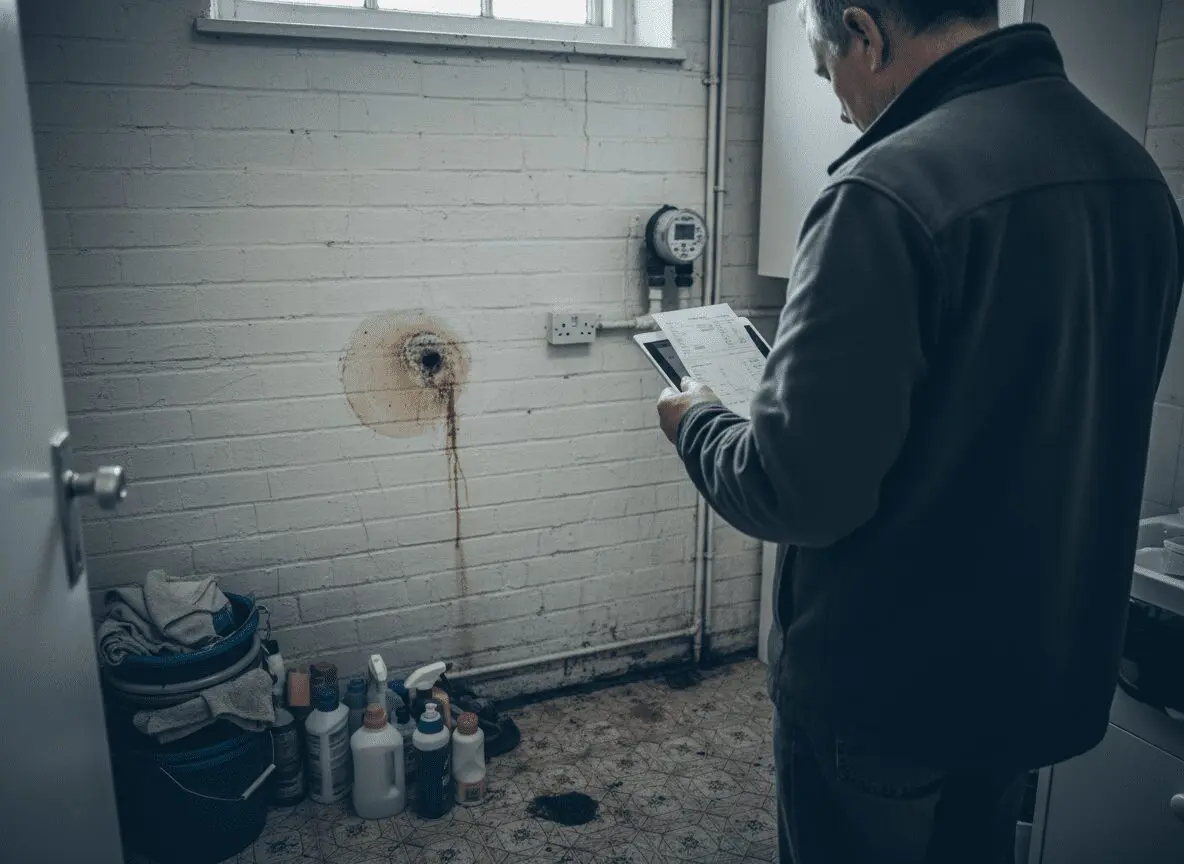
Green or white deposits on copper pipes, or rust-coloured staining on steel fittings, mean the joint has been under stress. Have these investigated before a full failure occurs.
External pipes and underground leaks
Leaks outside the property are less obvious but often more serious in terms of water waste and damage to driveways and garden areas.
Outdoor tap connections
Outdoor taps are exposed to freezing temperatures in winter and often use older fittings that degrade over time. Check the tap body, wall connector, and pipe run back through the brickwork for any drips or damp patches.
Consistently wet ground in dry weather
If part of your garden or driveway is consistently damp even during a dry spell, a buried supply pipe may be leaking underneath. You may also notice one area of lawn that is unexpectedly lush â a classic sign of an underground water leak feeding the root zone.
Sunken or cracked paving
Over time, water escaping from a buried pipe washes away the sub-base beneath paving or tarmac, causing it to sink or crack. This often shows up as a dip in a driveway that was not there before â and it tends to worsen quickly.
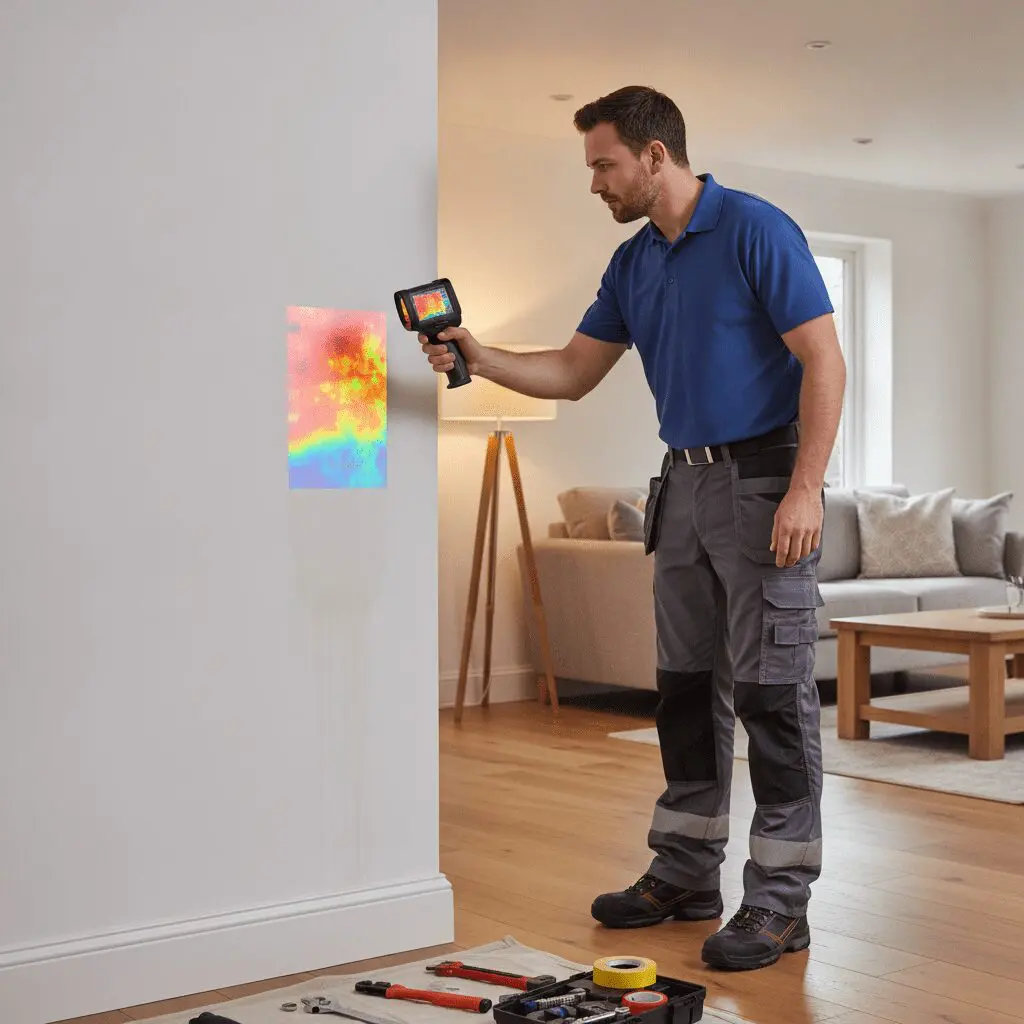
Underground leaks are difficult to locate without specialist equipment. A professional team uses acoustic listening devices, tracer gas, and thermal imaging cameras to trace the exact pipe route and identify the leak point without unnecessary excavation.
When to call a professional leak detection service in Sheffield
DIY checks are useful for obvious problems, but they have limits. Call a professional plumber or leak detection specialist if:
- Your water meter confirms water loss but you cannot find the source
- You can hear water running but cannot locate it visually
- You have damp patches without a clear cause
- Water is appearing through floors or ceilings
- You suspect a buried or underground pipe is leaking
- A leak you previously repaired has returned
- Your water bill has increased significantly without explanation
At Heat365, we use non-invasive leak detection methods wherever possible â acoustic listening, thermal imaging, and tracer gas testing â so we find the problem before opening walls or lifting floors. Our leak detection and repair service covers Sheffield, Rotherham, Doncaster, Barnsley, Chesterfield, and Worksop. We can typically attend the same day for active leaks.
Check your home insurance for trace and access cover
Many home insurance policies include trace and access cover, which pays for the cost of locating and accessing a hidden leak â even if the repair is not covered. Check your policy documents before booking, as this could significantly reduce your out-of-pocket cost.
Frequently asked questions
How much does professional leak detection cost in Sheffield?
Costs vary depending on the detection method and complexity. Simple visible leak detection starts from around £80â£120. Specialist acoustic or thermal imaging surveys for hidden or underground leaks are typically £150â£350. Always request a written quote before work begins.
Can a plumber find a leak inside a wall without making a hole?
Yes, in most cases. Acoustic listening devices and thermal imaging cameras allow plumbers to pinpoint hidden leaks with high accuracy before any access work is needed. This keeps disruption to a minimum.
How long can a hidden water leak go undetected?
Potentially months or years. Slow pinhole leaks in copper pipework can drip at a very low rate, causing gradual dampness and mould before the damage becomes obvious on the surface. This is why periodic inspection of accessible pipework is a good habit in older Sheffield properties.
Is a leaking pipe an emergency?
It depends on the rate and location of water loss. Fast-flowing leaks causing flooding or risking electrical equipment are emergencies â turn off mains water immediately and call us. A slow drip that is fully contained is less urgent but should still be investigated promptly. Do not assume a slow leak will stay slow.
Who is responsible for a leak in a shared water main in Sheffield?
Yorkshire Water is responsible for the shared communication pipe up to the property boundary. From the boundary into your home, responsibility falls to the property owner. Yorkshire Water can carry out an inspection of the external pipe free of charge if you are unsure of the source.