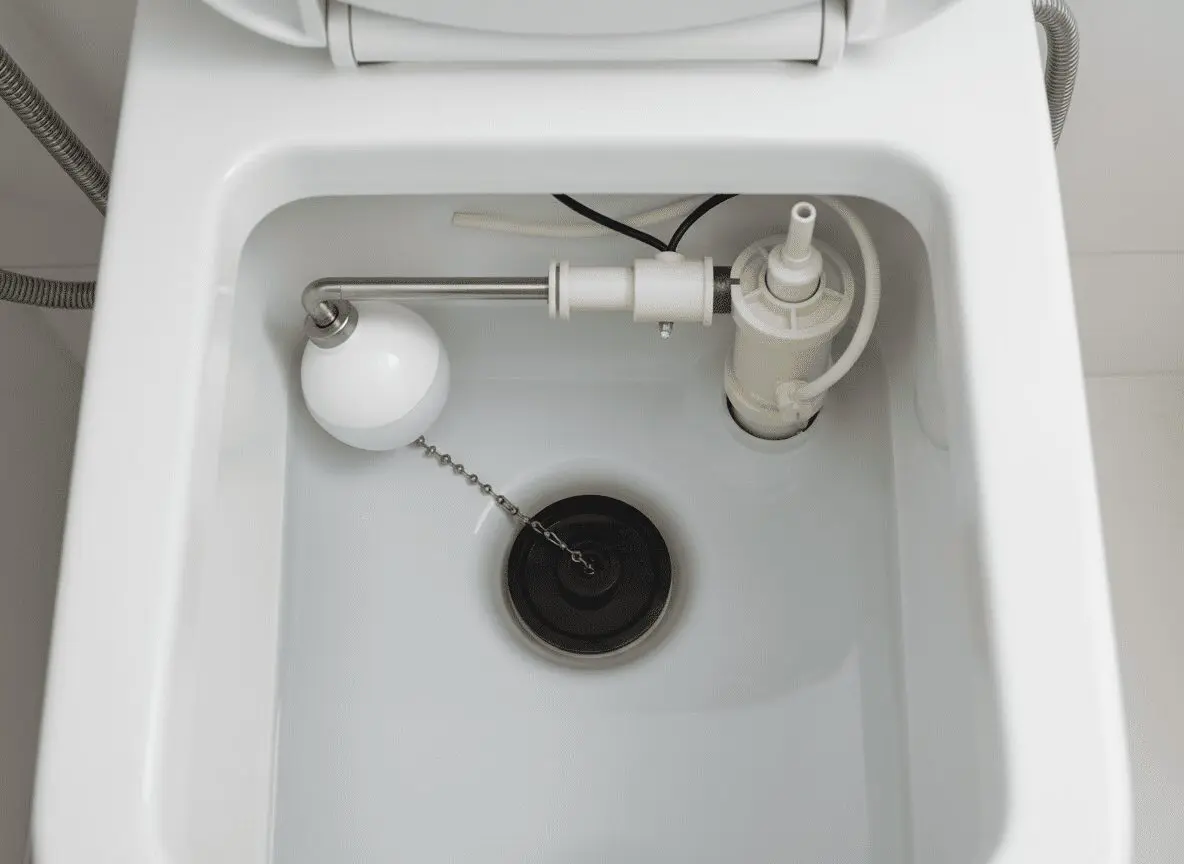
A toilet that runs constantly — that familiar trickling sound that never quite stops — is more than just annoying. A continuously running toilet can waste 200–400 litres of water per day, adding significantly to your water bill and putting unnecessary strain on cistern components. The good news: most causes are straightforward to identify, and many can be fixed quickly.
This guide explains the most common reasons a toilet keeps running in a Sheffield home, what you can do yourself, and when it’s time to call Heat365’s toilet repair team.
Why Is My Toilet Running Constantly?
The toilet cistern operates using a relatively simple set of components. When any of these fail or wear out, the result is usually water continuously entering or leaving the cistern. The three most common causes are:
- A faulty or worn flap valve (sometimes called a flapper)
- A malfunctioning fill valve (ballcock or inlet valve)
- A misaligned or failed overflow arrangement
Let’s look at each one in turn — what it is, what goes wrong, and what can be done about it.
Cause 1: Faulty Flap Valve
What it is
The flap valve sits at the bottom of the cistern and creates a watertight seal over the outlet when the toilet isn’t flushing. When you press the flush handle, the flap lifts, water rushes into the bowl, and the flap drops back to seal the outlet so the cistern can refill.
What goes wrong
Over time — typically after 5–8 years — the rubber flap valve becomes warped, cracked, or coated with limescale deposits. Sheffield’s water supply is moderately hard in some areas, which accelerates this process. When the flap degrades, it no longer creates a perfect seal, allowing water to slowly escape from the cistern into the bowl continuously.
How to spot it
The toilet runs constantly but you can still hear the cistern trying to refill. For confirmation, place a few drops of food colouring into the cistern. If you see colour appearing in the bowl without flushing within 15–20 minutes, the flap valve is leaking.
The fix
Flap valve replacement is a manageable repair for a confident DIYer. Turn off the water supply to the cistern (usually a slotted screw on the supply pipe), flush to empty the cistern, remove the old flap valve, and fit a matching replacement. Flap valves cost £5–£15. If you’re unsure of the type, take the old one to a plumbing merchant. A plumber can complete this repair in under 30 minutes.
Cause 2: Faulty Fill Valve
What it is
The fill valve (or inlet valve) controls how water enters the cistern after each flush. Once the cistern reaches the correct level, the fill valve should shut off completely. Older toilets use a ballcock — a float on the end of a metal arm — while modern toilets use a quieter side-entry or bottom-entry float valve.
What goes wrong
Fill valves fail in two ways. First, the valve itself may become worn and fail to shut off fully, meaning water continuously trickles in and eventually escapes through the overflow. Second, the float arm or float may become waterlogged or bend out of position, sitting too high and preventing the valve from shutting off when the cistern is full.
How to spot it
If water is draining down the overflow pipe — typically a small pipe exiting the cistern to the outside of the property — the fill valve is not shutting off correctly. A simple test: push the float arm gently downward while the cistern is filling. If the water stops flowing, the float position is the issue rather than the valve itself.
The fix
On older ballcock systems, carefully bending the float arm slightly downward can lower the cutoff water level and resolve the issue without replacing any parts. If the valve body itself is worn, replacement is the right solution. A plumber can replace a fill valve in under an hour, and parts cost £10–£30.
Cause 3: Water Running Down the Overflow
What it is
The overflow pipe is a safety mechanism — it carries water away if the cistern overfills, preventing flooding. In a healthy system, the overflow should never activate during normal use.
What goes wrong
If the fill valve isn’t shutting off correctly, the cistern fills past the safe level and begins running continuously down the overflow pipe. This presents as a constant trickle from an external pipe on the property wall, or a persistent water sound coming from the toilet even well after flushing.
The fix
Trace the overflow pipe — typically it exits through the external wall near the toilet — and check whether water is dripping or flowing from it. If it is, the fill valve requires adjustment or replacement, as described above.
Less Common Causes of a Running Toilet
Worn Syphon (Older UK Toilets)
Toilets manufactured in the UK before approximately 2000 typically use a syphon mechanism rather than a flap valve. The syphon contains a rubber diaphragm that perishes over time, leading to a continuous trickle into the bowl. Syphon replacement is straightforward but requires draining and removing the cistern from the wall — a job best left to a plumber if you haven’t done it before.
Cracked Cistern
In rare cases, a hairline crack in the porcelain cistern itself allows water to escape slowly, showing as persistent damp around the cistern base. Cracked cisterns cannot be permanently repaired — replacement is required. Your plumber will advise whether the pan also needs replacing to ensure compatibility.
High Water Pressure
Water pressure varies across Sheffield. Excessively high mains pressure can cause fill valves to fail prematurely and contribute to running toilets. If you experience this problem across multiple fixtures in the property — not just the toilet — a pressure reducing valve fitted to the mains supply may resolve it.
How Much Does Toilet Repair Cost in Sheffield?
Most running toilet repairs in Sheffield cost between £80 and £200 including parts and labour, depending on what needs attention:
| Repair | Estimated Cost (incl. labour) |
|---|---|
| Flap valve replacement | £70–£100 |
| Fill valve replacement | £80–£140 |
| Syphon replacement | £100–£160 |
| Full cistern service (all components) | £150–£200 |
| Full toilet replacement | £250–£600 (parts + labour) |
These figures are for a standard toilet in a Sheffield domestic property. If the cistern requires removal from the wall or additional access work is needed, costs may be slightly higher.
When to Call a Plumber for a Running Toilet
Call Heat365 if any of the following apply:
- You’ve tried replacing the flap valve or adjusting the fill valve and the problem persists
- The cistern is cracked or visibly damaged
- The toilet is leaking at the base, at the inlet pipe connection, or at the cistern-to-pan joint
- Your toilet is more than 15–20 years old and components are failing repeatedly
- You can hear the toilet running but can’t identify where the water is going
- You’re not comfortable working inside the cistern
A running toilet repair is quick and affordable for an experienced plumber — most jobs are completed within an hour. Leaving it unresolved will cost significantly more in wasted water than the repair itself.
Should You Repair or Replace Your Toilet?
If your toilet is more than 15 years old and experiencing repeated component failures, replacement may be more cost-effective in the long run. Modern dual-flush cisterns use significantly less water per flush — typically 4–6 litres versus 9–13 litres for older single-flush models — which reduces water consumption considerably. Over the course of a year, a new toilet can save a metered household £30–£60 in water costs, partly offsetting the cost of installation.
Heat365 supplies and fits replacement toilets across Sheffield. We can advise on suitable models based on your existing pipework and bathroom layout, and handle the full removal, installation, and plumbing connection.
Could a Running Toilet Point to a Bigger Plumbing Issue?
In most cases, a running toilet is a self-contained component failure with no wider implications. However, if you notice a running toilet alongside other symptoms — such as a boiler regularly losing pressure, unexplained damp elsewhere in the property, or a water bill that’s risen sharply — it’s worth having a broader inspection carried out. Our plumbers are happy to do a general condition check while attending for a toilet repair.
Frequently Asked Questions
How much water does a running toilet waste?
A continuously running toilet typically wastes between 200 and 400 litres of water per day — that’s up to 12,000 litres per month. On a meter, this can add £30–£80 or more to your monthly bill depending on your Yorkshire Water tariff.
Can I still use my toilet while it’s running?
In most cases, yes — a running toilet can still be flushed normally. The running sound is usually related to how the cistern refills or seals, which is separate from the flush mechanism. That said, book a repair promptly to prevent ongoing water waste and further component wear.
Will Yorkshire Water compensate me for the wasted water?
Yorkshire Water operates a leakage allowance scheme for confirmed internal leaks on metered properties. If your running toilet has been responsible for significantly elevated usage, it’s worth contacting them after the repair is completed. They assess cases individually and may offer a partial credit.
My toilet runs for a few minutes after flushing — is that normal?
It’s normal for a cistern to refill for 1–3 minutes after flushing. If the running continues beyond 5–10 minutes, or if it runs indefinitely without ever stopping, there’s a fault that needs attention.
Heat365’s plumbing team is available 24/7 across Sheffield, Rotherham, Chesterfield, Barnsley, Doncaster, and Worksop. Call 07534 793949 or email info@heat365.co.uk to book a toilet repair — most jobs completed within the same day.