Finding water under your boiler is worrying, and it’s natural to wonder whether you’re dealing with a minor nuisance or something genuinely dangerous. In this guide we’ll explain when a leaking boiler is dangerous, what different types of leaks mean, and the steps you should take to protect your home and your family.
Is a leaking boiler always dangerous?
Not every boiler leak is an immediate emergency, but no leak should be ignored. Even a slow drip can cause:
- Hidden damage to floors, joists and plasterboard
- Corrosion inside the boiler and heating system
- Electrical faults if water reaches wiring or components
Some leaks are also linked to more serious problems, such as overheating or pressure issues. If you’re ever unsure, it’s safer to switch the boiler off and contact a professional through the Emergency Plumber page.
Types of boiler leaks and what they mean
1. Leaking brown or rusty water
Brown or rusty water usually means there is corrosion and sludge inside your heating system. This can block pipes, damage radiators and reduce efficiency. Over time it may lead to overheating or pump failure.
For a deep dive into this specific problem, see your detailed article on boilers leaking brown water and emergencies. It explains when discoloured water is a warning sign and when it becomes an urgent issue.
2. Clear water dripping from pipework or joints
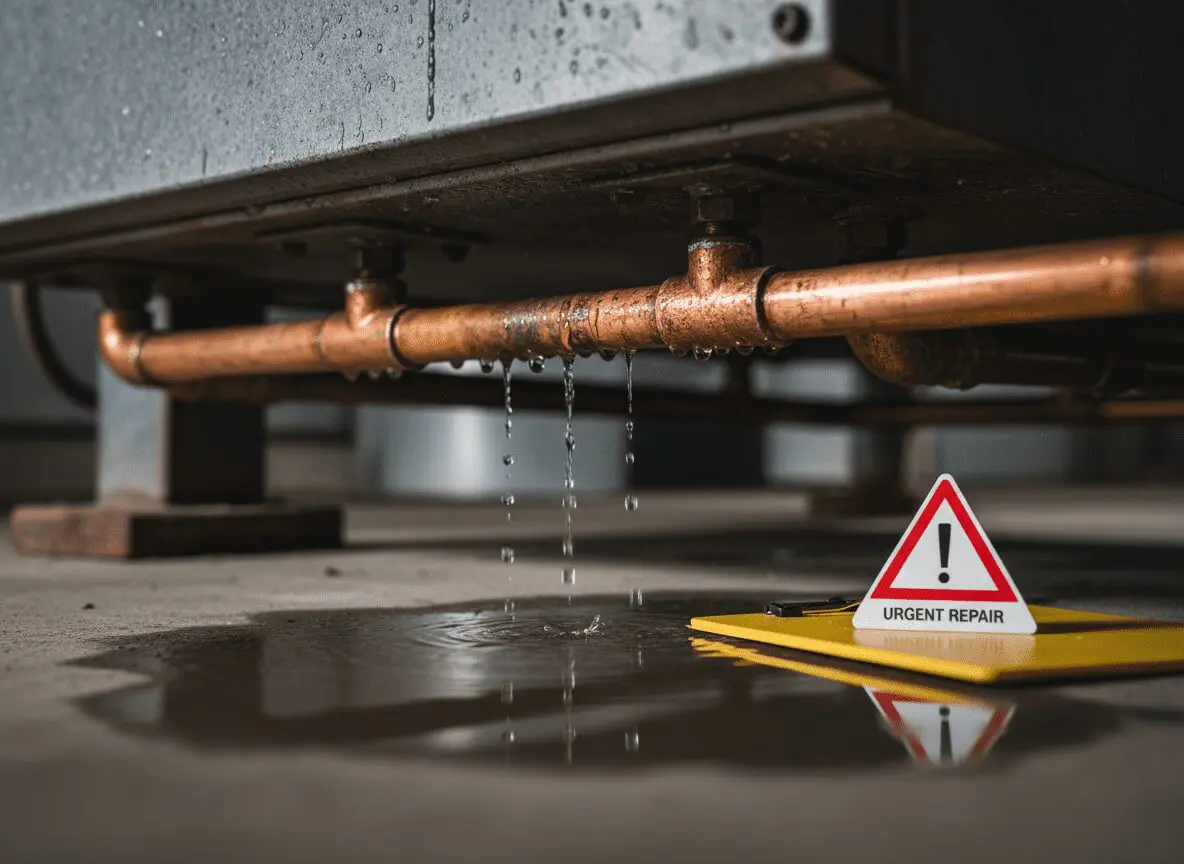
A slow drip from a joint or valve is often caused by worn seals, loose fittings or expansion and contraction of metal parts. While this might not be immediately dangerous, it can still:
- Rot wooden floors and skirting boards
- Cause mould and damp patches on walls or ceilings
- Lead to electrical hazards if water reaches wiring
These leaks should be treated as priority repairs, even if the boiler still seems to work normally. The Leak Detection & Repair page is a good place to start if you suspect a hidden or persistent leak.
3. Water from the pressure relief pipe outside
Most modern boilers have a pressure relief valve that discharges water through a copper pipe to the outside of your property. Occasional drips after a pressure spike may be normal, but:
- Constant dripping or a steady flow indicates the system is regularly over‑pressurising
- This can be caused by faulty expansion vessels, overfilling, or internal faults
Left unchecked, pressure problems can damage components and, in extreme cases, create safety risks. If you notice ongoing discharge from the outside pipe, book a prompt inspection via Boiler Servicing Sheffield.
4. Leaks near electrical components
Any sign of water near the boiler’s electrics, control panel or wiring is a potentially dangerous situation. Water and electricity are a bad combination and can cause:
- Short circuits and tripped breakers
- Damage to the boiler’s control board
- In rare cases, fire risk
If you can see water dripping onto cables, plugs or the boiler casing, turn the boiler off at the fused spur and seek urgent help through the Emergency Plumber page.
When a leaking boiler becomes an emergency
A boiler leak moves from “needs attention soon” to “emergency” when:
- Water is leaking heavily and spreading quickly
- Ceilings are bulging or water is coming through light fittings
- You can smell burning or see scorch marks near the boiler
- There are signs of overheating, banging noises or constant pressure loss
In these cases:
- Turn off the boiler using the control panel
- If safe, isolate the water supply to reduce further damage
- Move electrical items and valuables away from the affected area
- Call for urgent assistance via the Emergency Plumber page
Is a small boiler leak dangerous if I just keep topping up the pressure?
Regularly topping up your boiler pressure might seem like an easy fix, but it can actually make things worse:
- Fresh water introduces more oxygen into the system, speeding up corrosion
- Hidden leaks can grow over time and suddenly become major bursts
- Constant low pressure can cause the boiler to lock out when you need it most
If you find yourself topping up more than once every few months, there is likely a leak or internal fault that needs investigating. The Plumbing Sheffield page is a good starting point for arranging a proper diagnosis.
Could a leaking boiler cause carbon monoxide?
Water leaks themselves don’t create carbon monoxide (CO), but they can damage parts of the boiler that are essential for safe combustion, such as:
- Seals around the combustion chamber
- Flue components and joints
- Heat exchangers
If these are compromised, there is an increased risk of CO escaping into your home. This is why any leak inside the boiler casing should be checked by a Gas Safe registered engineer, and why regular servicing – as outlined on the Boiler Servicing Sheffield page – is so important.
Repair vs replacement: what if the boiler keeps leaking?
Some leaks can be fixed quickly with new seals or components. However, repeated leaks, heavy corrosion or multiple failing parts can be a sign that the boiler is nearing the end of its life. Replacement may be more cost‑effective if:
- Your boiler is over 10–15 years old
- Major components such as the heat exchanger are damaged
- Repairs are becoming frequent and expensive
- The boiler is inefficient and driving up your gas bills
In these cases, it’s worth comparing repair quotes with the cost of a modern, efficient replacement. You can see typical price ranges and options on the Boiler Installation Sheffield page.
How to reduce the risk of boiler leaks
While no boiler lasts forever, you can reduce the chances of leaks and water damage by:
- Booking an annual service to catch early signs of corrosion or wear
- Keeping an eye on pressure, unusual noises and any damp patches around the boiler
- Bleeding radiators and checking for cold spots that may indicate sludge build‑up
- Considering system cleaning or filter installation if you have older radiators – see the Radiators page for upgrade options
Key takeaways: is a leaking boiler dangerous?
- Any boiler leak is a problem and should be investigated – even slow drips.
- Leaks near electrics, heavy water loss or pressure problems can become dangerous quickly.
- Brown or rusty water is a sign of internal corrosion and needs prompt attention.
- Persistent leaks may mean it’s time to consider a new boiler rather than repeated repairs.
If you’ve spotted a leak and are worried about safety, switch the boiler off and arrange a professional inspection. Start with the Emergency Plumber page for urgent situations, or book a thorough check via Boiler Servicing Sheffield if the problem is minor but recurring.