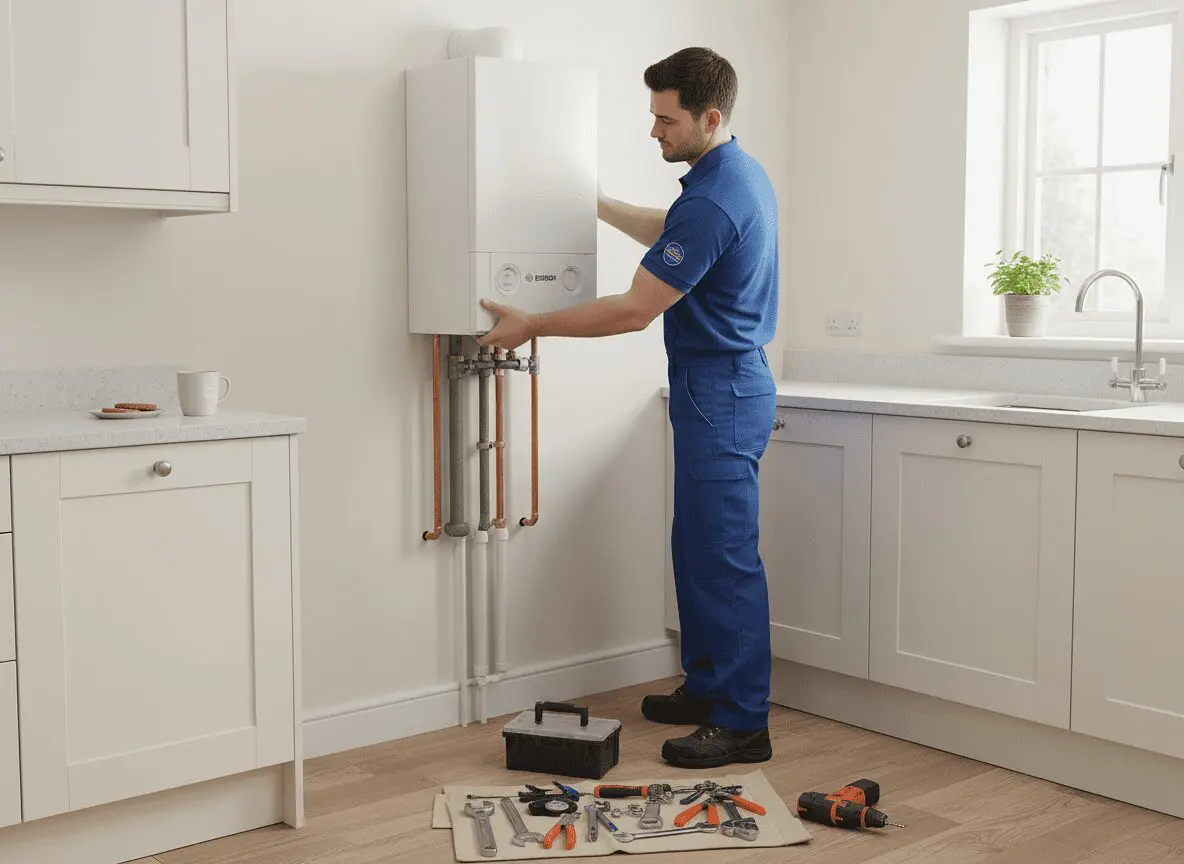
If you’re getting a new boiler fitted — whether it’s a straight replacement or part of a wider heating upgrade — knowing what to expect on the day helps you plan ahead. How long will the engineers be in your home? Will you have hot water by the evening? What happens if something unexpected comes up?
This guide gives you honest, practical answers to those questions so you can approach your boiler installation with confidence.
How Long Does a Boiler Installation Take?
For most straightforward boiler replacements in a standard Sheffield home, a new boiler can be installed in a single day — typically anywhere from four to eight hours depending on the job. In many cases, a like-for-like combi boiler replacement is completed within a day without any complications.
More complex jobs — such as switching from a regular (heat-only) boiler to a combi, moving the boiler to a new location, or installing a new system in a property that hasn’t had central heating before — may take one and a half to two days, and occasionally longer.
Your installation engineer should be able to give you a realistic time estimate when they assess or quote for the job.
What Affects How Long a Boiler Installation Takes?
Several factors can push an installation from a short job to a longer one. Understanding these helps you have a more realistic conversation with your engineer upfront.
Like-for-Like Replacement vs Changing Boiler Type
Swapping one combi boiler for another combi boiler in the same location is the quickest type of installation. The pipework connections are already there, the flue position is already established, and the controls can usually be reconnected quickly. An experienced engineer can often complete this kind of job in four to six hours.
Switching boiler type — for example, moving from a regular boiler with a hot water cylinder to a combi boiler — involves more work. The cylinder may need to be removed, pipework changes are required, and the overall system layout changes significantly. This type of conversion adds time and often takes a full day or more.
Changing the Boiler Location
If your new boiler is going in the same place as the old one, the job is simpler. If you want it moved — for example, from a utility room to an airing cupboard, or from a ground floor to a loft — new pipework needs to be run and a new flue position established. This adds several hours to the job and may require extra materials.
Flue Requirements
Most modern boilers use a balanced flue that exits through the wall. If the existing flue route is suitable, this is straightforward. If a new flue needs to be installed, or if the boiler is going in a position that requires a longer flue run or a different type of terminal, this adds time. In properties where the flue has to run internally before exiting, the work is more involved.
System Condition and Preparation
Before fitting a new boiler, your engineer will want to check the condition of the existing pipework and heating system. If there’s significant sludge build-up in the system — which is common in older properties — a power flush may be recommended before or alongside the installation. A power flush adds time (typically a half-day to a full day’s work) but it’s often worth doing to protect your new boiler and maintain its warranty.
If the pipework is in poor condition, or if there are other issues with the existing system that need addressing first, these will extend the overall time on site.
Gas and Electrical Connections
Modern boiler installations require both gas and electrical work. In most properties these connections are already in place. If upgrades are needed — for example, to the electrical supply to the boiler or the gas meter installation — this can add time and may require co-ordination with your gas supplier.
New Magnetic Filter
Most reputable engineers will recommend fitting a magnetic filter (such as a Fernox or Magnaclean filter) to your new boiler. This is a relatively quick addition and well worth doing — it catches debris and sludge before it can reach the boiler, significantly extending its lifespan. Budget an extra 30 minutes or so for this.
What Happens on the Day of Installation?
Knowing the order of events helps you understand what’s happening and why. Here’s a general overview of what a typical boiler installation day looks like:
Arrival and Set-Up
Your engineers will arrive and take a look at the existing system before starting work. They’ll cover floors and work areas, turn off the heating and hot water, and isolate the gas supply to the boiler before beginning.
Draining and Removing the Old Boiler
The heating system is drained down so the old boiler and connections can be safely removed. This is also when the old flue is removed, and any modifications to the pipework are made to suit the new boiler’s connections.
Fitting the New Boiler
The new boiler is mounted, and all connections are made — gas, water flow and return pipes, condensate drain, and electrical supply. The flue is fitted and properly sealed. Once everything is connected, the system is refilled.
Testing and Commissioning
Once the boiler is installed and the system is refilled, your engineer will carry out full commissioning checks. This includes checking for gas leaks, testing all controls and thermostats, checking boiler pressure and flow rates, and ensuring the system heats up correctly. They’ll bleed any radiators that need it and set the boiler controls.
Commissioning is a non-negotiable step and shouldn’t be rushed. It’s what ensures your boiler runs safely and efficiently, and it’s required for the manufacturer’s warranty to be valid.
Handover
Before leaving, your engineer will walk you through the new controls, explain how to check the pressure and top up if needed, and leave you with the relevant documentation. This includes the Benchmark commissioning record, which is essential for warranty purposes.
What Happens After Installation?
Once your new boiler is installed and commissioned, there are a couple of things to take care of:
Warranty registration: Most boiler manufacturers require you to register your new boiler within a set period — usually 30 days — to activate the full warranty. This is often done online. Your installer should point you in the right direction, and some will register it on your behalf.
First annual service: To keep your boiler warranty valid and your heating running efficiently, you’ll need to have the boiler serviced annually. It’s worth booking this in advance so you don’t miss it.
Smart thermostat compatibility: If you’re having a smart thermostat fitted alongside your new boiler, the set-up and pairing is usually done as part of the installation. Check with your engineer if you have any questions about how to use it once they’ve left.
How Long Should I Wait for a New Boiler After Booking?
In most cases, a new boiler installation can be booked within a week or two of getting a quote. During busy periods — particularly autumn and winter when boiler demand peaks — waiting times can stretch to several weeks for non-urgent jobs.
If your boiler has broken down and you need a replacement urgently, let your plumber know — emergency boiler replacement is often available with a faster turnaround, though this can come at a premium during peak periods.
To avoid being caught short in winter, the summer months are a good time to arrange a new boiler installation if you know yours is reaching the end of its life.
How to Prepare Your Home Before Boiler Installation Day
A little preparation goes a long way in making the day smoother:
- Clear the area around your existing boiler and in any spaces where pipework will be run or where engineers will need to work
- Make sure there’s access to your cold water stopcock in case it needs to be turned off
- Plan for being without heating and hot water during the installation — consider having alternative hot water available if you need it
- If you have pets that are likely to be unsettled by workers in the house, arrange for them to be somewhere comfortable
- Confirm the installation start time with your engineer the day before so you know when to expect them
Boiler Installation in Sheffield: What Heat365 Offers
Heat365 is a Gas Safe registered heating company based in Sheffield, covering the city and surrounding areas including Rotherham, Chesterfield, Barnsley, Doncaster, and Worksop. We supply and fit leading boiler brands including Worcester Bosch and Ideal, and we carry out every installation to manufacturer and Gas Safe standards.
Before any work begins, we’ll give you a clear quote and a realistic time estimate for your specific job. We don’t rush commissioning, and we make sure you understand your new controls before we leave.
Find out more on our boiler installation Sheffield page, or if your existing boiler needs a service first, see our boiler servicing Sheffield page.
Get a Quote for Boiler Installation in Sheffield
Planning a new boiler and want to know what’s involved for your specific property? Call Heat365 on 07534 793949 or get in touch online for a no-obligation quote. We’ll assess the job, give you a straight answer on timings and costs, and get your new heating sorted.
Related reading: What to Expect During a Bathroom Installation in Sheffield.