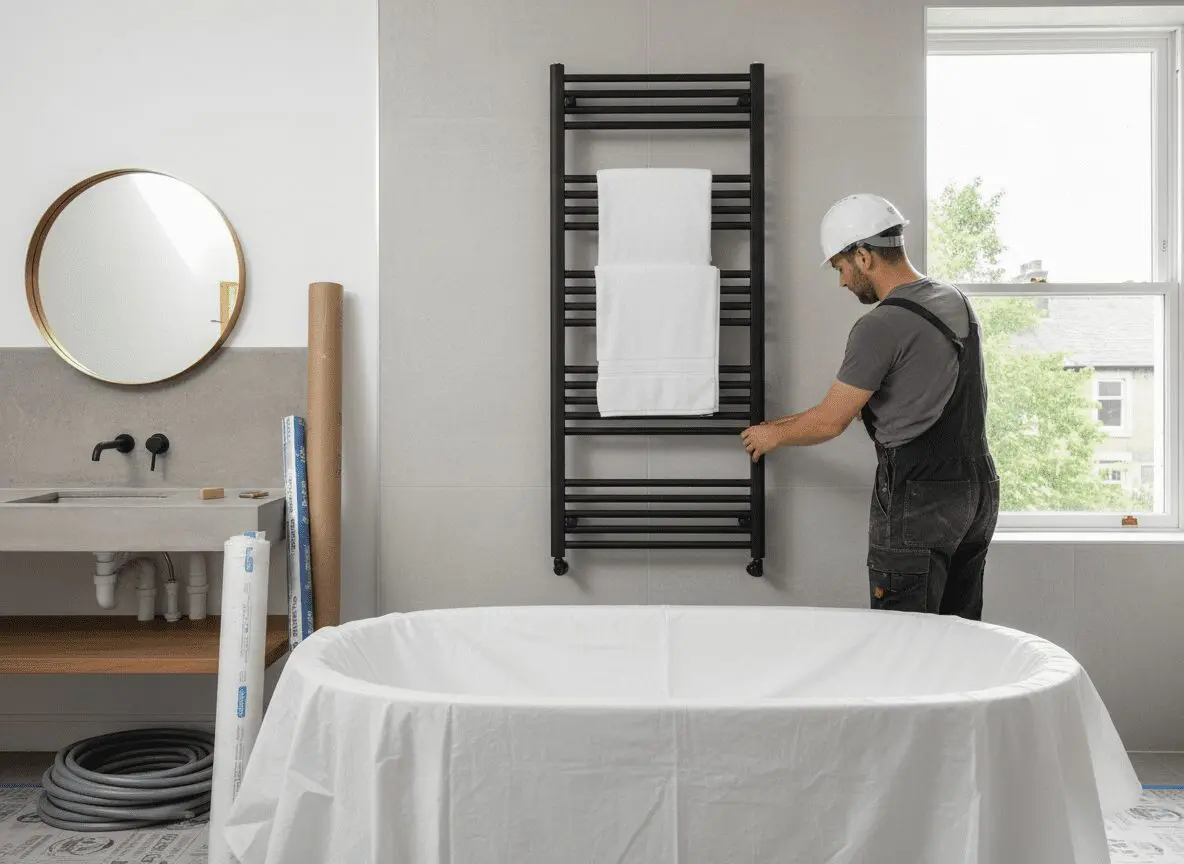
Is a Heated Towel Rail Worth It During a Bathroom Renovation?
If you are renovating a bathroom, a heated towel rail often ends up on the shortlist quite early. It looks smart, feels like an upgrade, and seems like one of those features that makes the room feel more finished. The real question is whether it is actually worth fitting or whether it is just a nice extra that sounds better than it performs.
Quick answer: A heated towel rail is often worth adding during a bathroom renovation if you want warm towels, better everyday comfort, and a cleaner finish than a standard radiator. It makes the most sense when the room is being redesigned anyway, because fitting is easier while plumbing, electrics, tiling, and layout decisions are already in progress. It is less worthwhile if you expect it to heat a large bathroom on its own or if the room already has a heating setup that works well without needing another feature.
That is usually the key point. A heated towel rail can be a very good bathroom upgrade, but only if you are clear on what it is there to do. If you want it mainly for warm towels, drying, and everyday comfort, it is often a good addition. If you expect it to replace a properly sized heating system in a bigger or colder bathroom, you may be disappointed.
Heat365 already has live bathroom renovation and bathroom fitting service pages covering full bathroom work in Sheffield, which makes this a sensible support topic for people planning a new bathroom rather than a stand-alone heating article. Those live pages also show that Heat365 handles bathroom upgrades, layout work, plumbing, tiling, electrics, and full installation work, so a towel rail decision fits naturally into that wider planning stage. :contentReference[oaicite:2]{index=2}
Contents
What a heated towel rail actually does well
A heated towel rail is not just about appearance. It has a practical role in the room. Used properly, it gives you a place to hang towels, helps them dry faster, and adds background heat to the bathroom.
That sounds simple, but in daily use it can make a clear difference. Bathrooms are one of the rooms where comfort matters most at the start and end of the day. Stepping out of a shower into a cold room and reaching for a damp towel is not a great experience. A towel rail improves both of those points.
It also helps keep the room feeling tidier. Instead of relying on separate rails, hooks, or an old radiator that was never designed for towels, you get one fitting that does both jobs more neatly.
In smaller bathrooms, cloakrooms, and ensuites, that can be a very sensible use of wall space. In many cases it gives you a cleaner look than a standard radiator while still adding some useful warmth.
Why people add one during a renovation
Most homeowners do not add a heated towel rail later by chance. They choose it during a bathroom renovation because that is when the room is already being rethought. Once the old suite is out and the layout is being planned, it becomes much easier to ask whether the heating setup should improve too.
Heat365’s bathroom fitting page says the company handles full installations from start to finish, including plumbing, tiling, electrics, plastering, flooring, and bathroom upgrades. Its bathroom renovation page presents bathroom remodels and design work as a full-service job, which makes fittings like towel rails part of the wider plan rather than an afterthought. :contentReference[oaicite:3]{index=3}
That matters because a towel rail choice is rarely only about the rail itself. It links to:
- where the plumbing runs will go
- how much wall space you have
- what other heating is in the room
- where towels will be stored and dried
- how the finished room should look
Trying to bolt that decision on after the room is already finished can be awkward. During renovation, it is far easier to get it right.
When a heated towel rail is worth it
A heated towel rail is often worth the money and the effort when it solves a real need in the room rather than just filling a blank wall.
You want warm, dry towels every day
This is the most obvious reason, and for many people it is enough on its own. If you use the bathroom every day and want towels to dry more quickly between uses, a heated rail gives you a practical upgrade you will notice straight away.
You are already renovating the bathroom
This is one of the strongest reasons to do it. If the room is already being stripped back or refitted, adding a towel rail is much easier than coming back later. Plumbing access is easier, wall finishes are already being worked on, and you can design the space around the rail properly.
You want a cleaner look than a standard radiator
A lot of bathrooms still have basic radiators that do the heating job but do little for the room visually. A heated towel rail often gives a neater and more bathroom-specific finish.
That does not mean it has to be fancy or overdesigned. It just tends to look more suited to the space.
You have a smaller bathroom or ensuite
In smaller rooms, a heated towel rail can make a lot of sense because it combines two jobs in one fitting. You save wall space and still get a useful heat source for the room.
You want better day-to-day comfort
Some upgrades are mostly visual. This one is more practical. A warm towel, a quicker-drying bathroom, and a room that feels less cold after bathing all add up over time.
When it may not be enough on its own
This is where expectations matter. A heated towel rail can improve comfort, but it is not always the right answer as the only heat source in the room.
Larger bathrooms may need more heat
If you are renovating a bigger bathroom, the rail may not provide enough warmth on its own, especially in colder months. In that case, it works better as part of the overall heating setup rather than as the whole plan.
That could mean keeping or upgrading the main room heating, or looking at options such as radiators or underfloor heating alongside the towel rail.
Some people expect it to heat the room like a full radiator
This is a common mistake. A towel rail can add warmth, but its first strength is drying and warming towels. It should not automatically be treated as a full substitute for a properly planned heating setup.
The room layout may make another option more practical
In some bathrooms, wall space is limited or better used for storage, mirrors, or fixtures. If the towel rail forces awkward compromises elsewhere, it may not be the best fit just because it looks like a good idea on paper.
Simple rule: A heated towel rail is usually a very good bathroom feature. It is not always enough to be the entire heating plan for the room.
Why renovation is the best time to fit one
Even if you are sure you want a heated towel rail, timing still matters. Bathroom renovation is usually the best time to fit one for a few straightforward reasons.
The room is already being worked on
When a bathroom is already being stripped, tiled, re-plumbed, or reconfigured, adding a towel rail is far easier than working around a finished room later.
Plumbing and positioning can be planned properly
During renovation, you can choose the best height, wall position, and pipe route before the final finishes go on. That tends to give a cleaner result.
You can match it to the rest of the bathroom design
Bathrooms look better when fittings feel planned rather than added one by one over time. If the towel rail is chosen as part of the overall scheme, the room usually feels more balanced and complete.
It is easier to coordinate with other heating choices
If you are also looking at floor heating, radiator changes, or a broader plumbing refresh, doing it all at the same stage avoids piecemeal decisions later.
Heat365’s bathroom planning content says electrics, extractor fans, and heated towel rails should be thought through before the job starts, not midway through. That matches the practical reality on site. A towel rail decision is best made while the room is still on the drawing board. :contentReference[oaicite:4]{index=4}
What to think about before choosing one
Not all towel rails suit every bathroom. Before choosing one, it helps to think about how the room will actually be used.
How big is the bathroom?
The bigger the room, the less likely a small towel rail will be enough on its own. This affects whether it is a comfort feature or a major part of the heating plan.
How many towels will it need to hold?
A family bathroom with several users will need more hanging space than a small ensuite. There is no point fitting a rail that looks tidy but is too limited in daily use.
Where will it go?
It should be easy to reach from the bath or shower without crowding the room or making the layout awkward. Position matters more than many people expect.
What other heating will the room have?
This is one of the biggest questions. If the towel rail is part of a bathroom that also has strong room heating, it is easier to choose it mainly for comfort and design. If it is the only source, it needs much more careful thought.
Does the room already suffer from dampness or slow drying?
Bathrooms that stay damp for too long after use may benefit more from a towel rail because it helps keep towels drier and can improve day-to-day comfort in the space.
What does “worth it” really mean here?
For one homeowner, worth it means lower hassle and better comfort. For another, it means making the room look more finished. For someone else, it may mean a practical way to combine heating and towel storage in a smaller space.
That is why this is not really a yes-or-no feature. It is about fit.
A heated towel rail is usually worth it when:
- you are already renovating the bathroom
- you want towels to dry properly
- you want the room to feel warmer and more comfortable
- you want a tidier heating option than a standard radiator
- the rail works with the room layout
It is less worth it when:
- you expect it to solve all heating needs in a large bathroom
- it forces awkward layout compromises
- you are adding it purely for looks without thinking about use
Common mistakes to avoid
Choosing on appearance alone
A rail may look great in a brochure, but the real test is whether it suits your room and how you use it.
Putting it in the wrong place
If it is too far from the bath or shower, too cramped, or hidden behind doors or fixtures, it becomes less useful every day.
Assuming bigger always means better
A large towel rail in a small bathroom can overpower the room. The best choice is the one that fits the space properly.
Ignoring the wider heating plan
This is the main technical mistake. A towel rail should be part of the heating conversation, not a substitute for it unless the room size and setup genuinely allow that.
Leaving the decision too late
Once tiling, pipe routes, and wall finishes are already fixed, your options become narrower. It is far better to decide early while the renovation plan is still flexible.
So, is it worth adding one?
For many Sheffield homeowners planning a bathroom upgrade, yes, a heated towel rail is worth considering. It adds comfort, helps towels dry, improves the way the room feels in daily use, and often suits the look of a renovated bathroom better than an old standard radiator.
But it is worth it for the right reasons. It works best when it is chosen as part of a practical bathroom plan, not just as a visual extra. If the room still needs proper main heating, the towel rail should support that plan rather than try to replace it.
Heat365 already offers bathroom renovation and bathroom fitting services across Sheffield, along with related heating services such as radiators and underfloor heating. That makes this decision part of a bigger room-planning conversation rather than a one-off product question. :contentReference[oaicite:5]{index=5}
Thinking about adding a heated towel rail during your bathroom renovation?
Heat365 can help you plan a bathroom that looks right, works properly, and includes the right heating setup for the space.
Frequently Asked Questions
Is a heated towel rail enough to heat a bathroom?
Sometimes in a smaller bathroom or ensuite, but not always. In larger bathrooms it often works better as part of the heating setup rather than the only source of heat.
When is the best time to fit a heated towel rail?
During a bathroom renovation. It is easier to plan pipe routes, wall position, tiling, and the overall layout while the room is already being worked on. Heat365’s bathroom planning content also highlights heated towel rails as something to plan ahead rather than add at the end. :contentReference[oaicite:6]{index=6}
Is a heated towel rail better than a radiator in a bathroom?
It can be, especially if you want warm towels and a more bathroom-specific look. A standard radiator may still offer stronger room heating in some setups, so the better option depends on the room size and the wider heating plan.
Does a heated towel rail make a bathroom feel more comfortable?
Yes, it often does. Warm towels and a bit of background heat can make the room feel more pleasant day to day, especially after bathing.
Does Heat365 fit heated towel rails as part of bathroom work?
Heat365’s live bathroom renovation and bathroom fitting pages show that it handles full bathroom installation work, including plumbing and bathroom upgrades, so a heated towel rail fits naturally within that service scope. :contentReference[oaicite:7]{index=7}