Blocked Drain Sheffield: DIY or Call a Plumber? How to Decide
A blocked drain is one of the most common plumbing problems Sheffield homeowners face — and one of the most frequently misjudged. Some blockages are simple enough to clear yourself in minutes. Others need professional equipment. This guide helps you tell the difference so you don’t waste money on a callout for something trivial, or waste time on a problem that needs a plumber.
The Different Types of Blocked Drain
Before deciding whether to tackle a blocked drain yourself or call a plumber in Sheffield, it helps to understand what type of blockage you’re dealing with.
Sink and basin drains
Kitchen sink blockages are usually caused by grease, fat, and food debris that has built up in the waste trap or the pipe immediately below it. Bathroom basin blockages are typically hair and soap scum. Both types are usually accessible and often respond to home remedies.
Bath and shower drains
Hair is the primary culprit in bath and shower drains, often compacted around the drain cover or just below it. Most are reachable with simple tools.
Toilet blockages
Toilets block when too much paper, non-flushable wipes, or other foreign objects are flushed. A plunger is often effective, but if the blockage is further down the soil pipe, professional rodding or jetting may be needed.
External drain and sewer blockages
Blockages in your external drain inspection chamber or shared sewer require professional equipment. These are often caused by root intrusion, accumulated grease, or structural collapse in older clay pipes — common in Sheffield’s period housing stock. These are not DIY jobs.
Important: shared drains
If the blocked drain serves multiple properties, it may be a shared sewer and the responsibility of Yorkshire Water, not the individual householder. Heat365 can help identify whose responsibility the drain is and advise on the appropriate course of action.

What You Can Try Yourself First
Not every blocked drain in Sheffield needs a plumber. For minor blockages in accessible locations, the following home remedies are worth trying before making a call.
Boiling water
For kitchen sink drains blocked by grease, a kettle of boiling water poured slowly down the drain can soften and shift fat deposits. Repeat two or three times. This won’t work on serious blockages, but it costs nothing and takes two minutes.
Baking soda and vinegar
Pour half a cup of bicarbonate of soda down the drain, followed by half a cup of white vinegar. Cover the drain for 20–30 minutes, then flush with hot water. The fizzing action can break up soft blockages and neutralise odours.
A drain plunger
A cup plunger works well on sink and basin drains. Fill the basin with enough water to cover the rubber cup, place it over the plughole, and pump firmly up and down for 20–30 seconds. A flange plunger is more effective for toilets.
Removing and cleaning the trap
Under every sink is a U-shaped or P-shaped trap — the curved section of pipe below the basin. This is the most common site of a kitchen or bathroom blockage. Place a bucket underneath, unscrew the collar nuts by hand or with grips, remove the trap, clean it out, and replace it. The whole job takes ten minutes and costs nothing.
If none of the above resolves the blockage, or if the water is backed up completely, it’s time to call a professional.
Signs You Need a Professional Drain Unblocking Service
Some blockages are beyond household remedies. Call Heat365 if you notice any of the following:
- Multiple drains blocked simultaneously — if your kitchen sink, toilet, and bath all drain slowly at the same time, the blockage is in the main soil pipe or sewer. This is a professional job.
- Sewage smell from drains — a persistent sewage smell indicates a blockage in the drainage system rather than just in the trap.
- Water backing up into other fixtures — if flushing the toilet causes water to rise in the bath, or running the washing machine causes the kitchen sink to back up, the main drainage is blocked.
- Gurgling from drains or toilets when water runs elsewhere — a telltale sign of a partial blockage further down the system trapping air.
- Blocked external inspection chamber — if your drain inspection cover shows water pooled in the chamber, the blockage is in the external drainage and needs professional rodding or jetting.
- Repeated blockages in the same drain — if the same drain keeps blocking within days or weeks, there’s likely an underlying issue: a partial collapse, or root intrusion. A CCTV drain survey will identify the cause.

What a Professional Drain Unblocking Service Involves
Diagnosis first
We assess which drain is affected, whether it’s a single appliance or the main drainage system, and whether the issue is in your private drainage or the shared sewer.
High-pressure water jetting
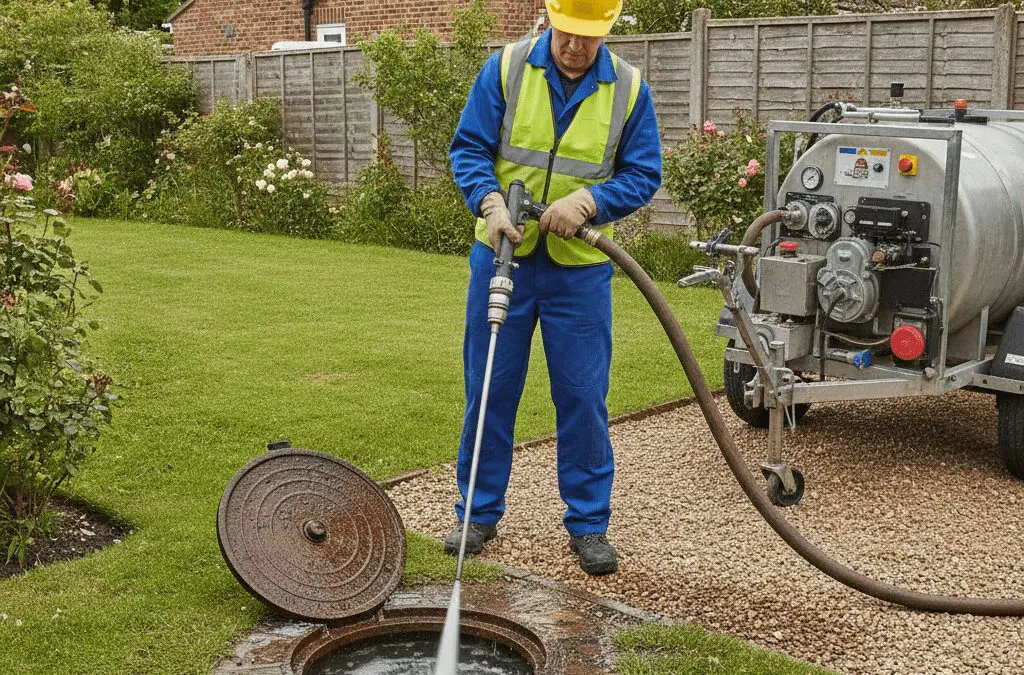
For most external blocked drains and stubborn internal blockages, high-pressure water jetting is the most effective method. A flexible hose with a specialist nozzle is fed into the drain and jetted at high pressures, clearing accumulated grease, debris and (in some cases) tree roots that rods cannot shift. The water also cleans the inside of the pipe.
Drain rodding
For blockages that can be reached by rodding, flexible drain rods with a rotating head can be used to break up and push through the obstruction — typically in the section of drain from your property to the inspection chamber.
CCTV drain survey (if needed)
If the blockage keeps recurring or if there’s reason to suspect damage, a CCTV drain camera is fed through the system to give a visual inspection. Particularly useful in Sheffield’s older housing where clay pipe drainage is common and can deteriorate over time.
Drain Unblocking Costs in Sheffield 2026
- Simple internal blockage (sink, bath, basin) — typically £80–£150 for a standard callout and clearing
- External drain rodding — typically £100–£200 depending on access and depth
- High-pressure water jetting — typically £150–£300 for a standard residential drain
- Emergency callout (same-day or out of hours) — typically adds £50–£100 to standard rates
- CCTV drain survey — typically £150–£350 depending on drain length and access
Heat365 provides upfront pricing before work begins. There are no hidden charges and no surprise invoices after the job.
Is it worth clearing a blocked drain myself first?
Yes — always try the simple methods first. If the blockage clears, great. If it doesn’t — or if it keeps returning — a professional callout is the right next step. Persisting with increasingly aggressive home methods risks damaging pipework, especially in Sheffield’s older housing stock.
How to Prevent Blocked Drains in Your Sheffield Home
Kitchen drains
- Never pour cooking fat, grease, or oil down the kitchen sink — let it cool, solidify, and bin it
- Use a sink strainer to catch food debris
- Run hot water down the drain for 30 seconds after washing greasy pots
Bathroom drains
- Fit a hair catcher over your bath and shower drains — they’re inexpensive and prevent significant blockage problems
- Clean the hair catcher after every shower
- Don’t dispose of wet wipes (including “flushable” wipes) or sanitary products in the toilet
External drains
- Clear leaves and garden debris from drain grates before they wash down in heavy rain
- Keep tree roots in check if a tree sits close to your drainage run
- Check your inspection chamber occasionally — if it looks clear, your main drain is likely in good order
FAQs — Blocked Drains in Sheffield
How quickly can Heat365 attend a blocked drain in Sheffield?
For emergencies, Heat365 offers a 24/7 response service. For non-emergency callouts, we aim to attend same-day or next-day in the Sheffield area. Call 07534 793949 to check current availability.
Who is responsible if the blocked drain is under the road or pavement?
Blocked drains in the public highway or shared sewer are the responsibility of Yorkshire Water. If the blockage is in your private drain — from your property to the connection point — it is your responsibility as the homeowner. Heat365 can help identify which category your drainage issue falls into.
Can chemical drain cleaners damage my pipes?
Yes. Chemical drain cleaners are corrosive and can damage older clay pipes and certain plastic pipework over time. Use them only as a last resort before calling a professional, and never in conjunction with other cleaning products.
My drain cleared but still smells — what’s causing it?
A persistent smell after a blockage has cleared usually indicates residual grease in the pipe walls, or a partially dry trap. Run hot water for several minutes and try a baking soda and vinegar treatment. If the smell persists, it can indicate a cracked pipe — worth investigating with a CCTV camera.
Do I need a CCTV survey for a simple blocked drain?
Not usually. A CCTV survey is recommended if the drain keeps blocking after clearing, if you’re buying a property and want to check the drainage condition, or if there’s reason to suspect structural damage. For a one-off blockage that clears fully, a survey isn’t necessary.