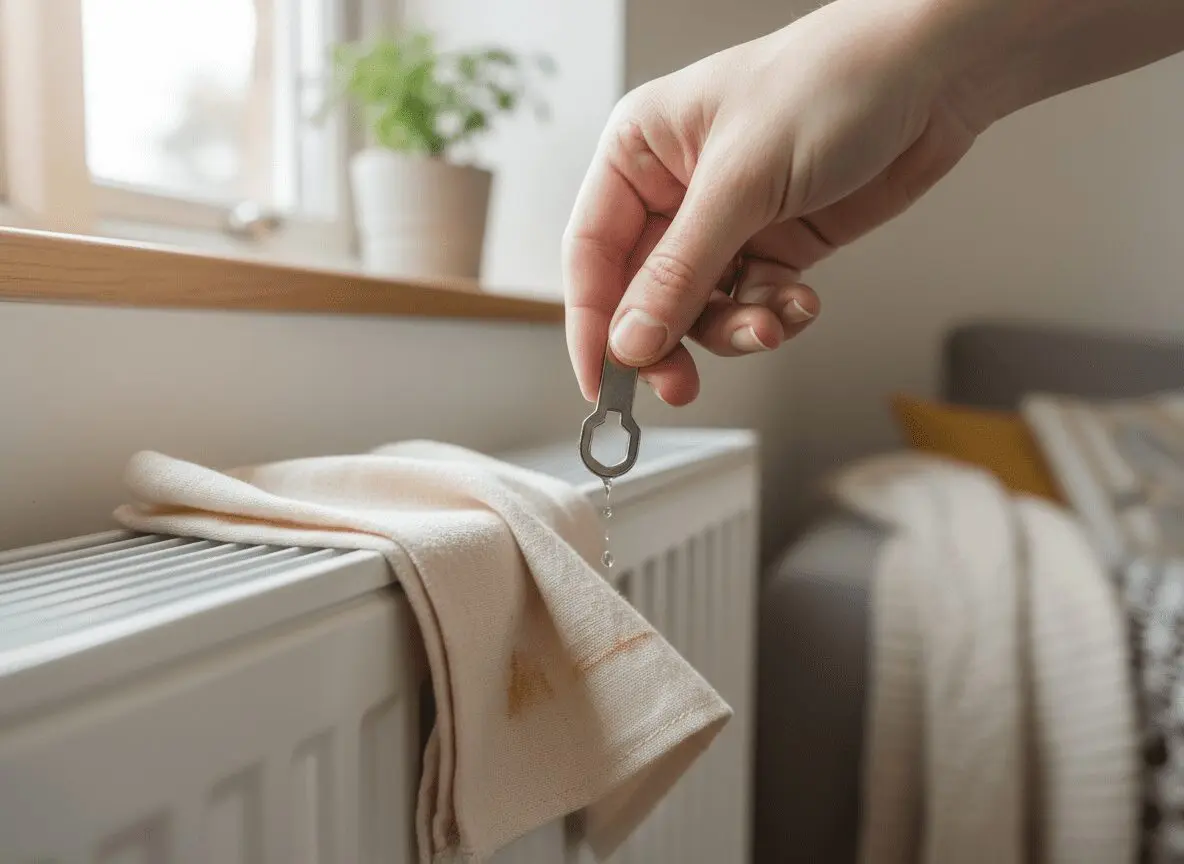
If a radiator feels cold at the top but warm at the bottom, or you’re hearing gurgling and bubbling sounds when the heating comes on, bleeding your radiators is usually the first thing to try. If you are also hearing persistent banging or hissing, our guide on noisy radiator causes and fixes explains what each sound means and when to call an engineer. It’s one of the few heating maintenance jobs that most homeowners can do themselves — and it takes less than ten minutes once you know how.
This guide walks through exactly what bleeding a radiator involves, how to do it safely, and the signs that it’s a symptom of a larger problem worth getting a heating engineer to look at.
Why Do Radiators Need Bleeding?
Over time, air can build up inside your central heating system. This happens naturally as water moves through the system and small amounts of air are drawn in. When air gets trapped in a radiator, it sits at the top of the radiator and prevents hot water from filling that space. The result is a cold patch at the top, reduced heat output, and sometimes a gurgling or hissing noise.
Bleeding the radiator releases that trapped air and allows the full radiator to fill with hot water again. It’s a simple fix that can make a real difference to how well your heating system performs.
Signs Your Radiator Needs Bleeding
Not every radiator problem needs bleeding. The signs that suggest air is the issue include:
- The radiator is cold or lukewarm at the top but warm or hot at the bottom
- You can hear a gurgling, bubbling or hissing sound when the heating is on
- Your heating system takes noticeably longer than usual to warm up
- Some rooms feel much colder than others even with the heating on full
- Your energy bills have gone up without an obvious reason
If the entire radiator is cold — not just the top — that’s a different problem. It’s more likely a flow issue, a stuck valve, or a sludge build-up in the system. Bleeding won’t fix those, but a heating engineer can.
What You’ll Need Before You Start
- A radiator bleed key (available from any hardware or DIY shop for a pound or two)
- A small container or old towel to catch any water drips
- A cloth for wiping up
How to Bleed a Radiator: Step by Step
Which Radiators Should You Bleed First?
Start with the radiator furthest from your boiler, typically upstairs and at the end of the run. Work your way back towards the boiler. This approach gives the best result because it clears air from the system in the most logical order.
If you’re not sure which radiators need bleeding, a good approach is to turn the heating on, let the system warm up for 10–15 minutes, then feel across each radiator. Any that are cold at the top are candidates for bleeding.
How Often Should You Bleed Radiators?
There’s no fixed rule, but once a year — ideally before winter sets in — is a sensible habit. If you find yourself needing to bleed the same radiator repeatedly within a short period, that suggests the air is getting back in from somewhere. Common causes include:
- A leak somewhere in the system allowing air to be drawn in
- A failing pump
- A fault with the automatic air vent on the system
- Hydrogen gas produced by corrosion inside the system (a sign of sludge build-up)
Repeated bleeding without the problem resolving is a sign to call a heating engineer. It’s usually more than just trapped air at that point.
What If Bleeding Doesn’t Fix the Problem?
If you’ve bled the radiator correctly and it’s still not heating evenly, other possibilities include:
Sludge or magnetite build-up
Over years of use, a central heating system can accumulate rust, scale and debris — a black sludge known as magnetite. This settles in radiators and pipework, blocking flow and reducing heat output. A power flush from a heating engineer clears the system and restores proper circulation.
A faulty thermostatic radiator valve (TRV)
If a TRV gets stuck in the closed position, the radiator won’t heat up regardless of bleeding. A stuck TRV is easy to diagnose and usually inexpensive to fix.
Balancing issue
If some radiators heat up much faster than others, the system may need balancing — adjusting the flow to each radiator so the heat is distributed evenly throughout the home. This is a job for a heating engineer, but it makes a significant difference to comfort and efficiency.
| Radiator Symptom | Likely Cause | Solution |
|---|---|---|
| Cold at top, warm at bottom | Trapped air | Bleed the radiator |
| Cold all over but other radiators fine | Stuck TRV or valve | Engineer — check valve |
| Cold at bottom, warm at top | Sludge build-up | Engineer — power flush |
| Some rooms much colder than others | Balancing issue | Engineer — re-balance system |
| Keeps needing bleeding repeatedly | Air leak or corrosion | Engineer — system check |
Is Bleeding Radiators Safe?
Yes, as long as you wait for the system to cool down first. Hot water under pressure can cause scalding. If you open the valve too much, water will flow out faster than a drip, so keep a firm grip on the key and only turn a quarter-turn at a time.
There’s nothing in the process that involves gas, electrics, or the boiler itself — just water and air. It’s one of the few home heating maintenance tasks that’s genuinely safe for a careful homeowner to carry out.
When to Call a Heating Engineer
Call Heat365 if:
- Bleeding the radiator doesn’t solve the problem
- You need to bleed the same radiator repeatedly over a short period
- Your boiler pressure drops significantly after bleeding and you’re not sure how to repressurise it
- The water that comes out when you bleed is dark or black (a sign of sludge in the system)
- Multiple radiators in the house are performing poorly
- You notice a leak anywhere around the radiator or pipework
Radiator Still Not Heating Properly?
Heat365 provides heating and radiator services across Sheffield, Rotherham, Chesterfield, Barnsley, Doncaster and Worksop. Gas Safe registered. Available 24/7 for emergencies.
Frequently Asked Questions
Do I need to turn the heating off before bleeding radiators?
Yes. Always turn the heating off and let the radiators cool before you start. Opening a valve on a hot, pressurised radiator risks hot water or steam escaping under pressure.
How do I know when to stop bleeding?
Stop when the hissing stops and a steady trickle of water appears. That means the air has been fully released. Close the valve at that point — don’t wait for a lot of water to come out.
Can bleeding a radiator damage it?
If done carefully, no. The main risks are overtightening the valve (which can damage the valve seat) or opening it too far (which can cause a flood). A gentle quarter-turn is all you need to open the valve.
What if I can’t find the bleed valve?
Some older or unusual radiators have the bleed valve in a different position, or it may be covered by a cap. If you can’t locate it, call a plumber rather than guessing — attempting to open the wrong fitting can cause a leak.
Regular radiator bleeding is a simple way to keep your heating system running efficiently. If you’re working through your radiators and finding more problems than a quick bleed can fix, a boiler service from Heat365 can give your whole system a thorough check before the colder months arrive. Call us on 07534 793949 or email info@heat365.co.uk.