Boiler Diverter Valve Problems: Hot Water but No Heating, and the Other Way Round
Search this fault and every result tells you the same thing: hot water but no heating means a stuck diverter valve. That is sometimes true and often not, and getting it wrong is expensive — because a boiler diverter valve is a chargeable part on a boiler that may not need one. This guide explains what the valve actually does, which symptom patterns genuinely point at it, which ones point somewhere cheaper, and what a Gas Safe engineer will check before condemning it.
The short answer
A boiler diverter valve directs hot water either to your radiators or to your taps. When it sticks, you get one or the other but not both properly: cold radiators while the taps run hot, or lukewarm taps that only get hot when the heating is on. Only a Gas Safe registered engineer can free or replace it.
One or the other, but never both?
That pattern is worth a proper diagnosis rather than guesswork. Heat365 covers boiler repairs across Sheffield and the surrounding towns, 24 hours a day.
What a diverter valve does
A diverter valve exists only on combi boilers. If you have a system or regular boiler with a hot water cylinder in the airing cupboard, you have a motorised zone valve instead — similar idea, different part, different failure behaviour.
In a combi, one heat exchanger has to serve two jobs. Vaillant describes the part plainly: a diverter valve is a mechanism in a combi boiler that opens or closes to direct hot water either to radiators or to taps and showers.
Crucially, it prioritises your taps. Open a hot tap and the valve swings across, the radiators drop out of the circuit, and everything the burner produces goes to the domestic hot water. Close the tap and it swings back. On a busy household boiler that is thousands of movements a year.
Two things then go wrong with it over time. The moving parts wear, and debris circulating in the system water — the same sludge that makes radiators go cold at the bottom — works its way into the valve body and gums it up. Neither happens overnight, which is a useful diagnostic clue in itself.
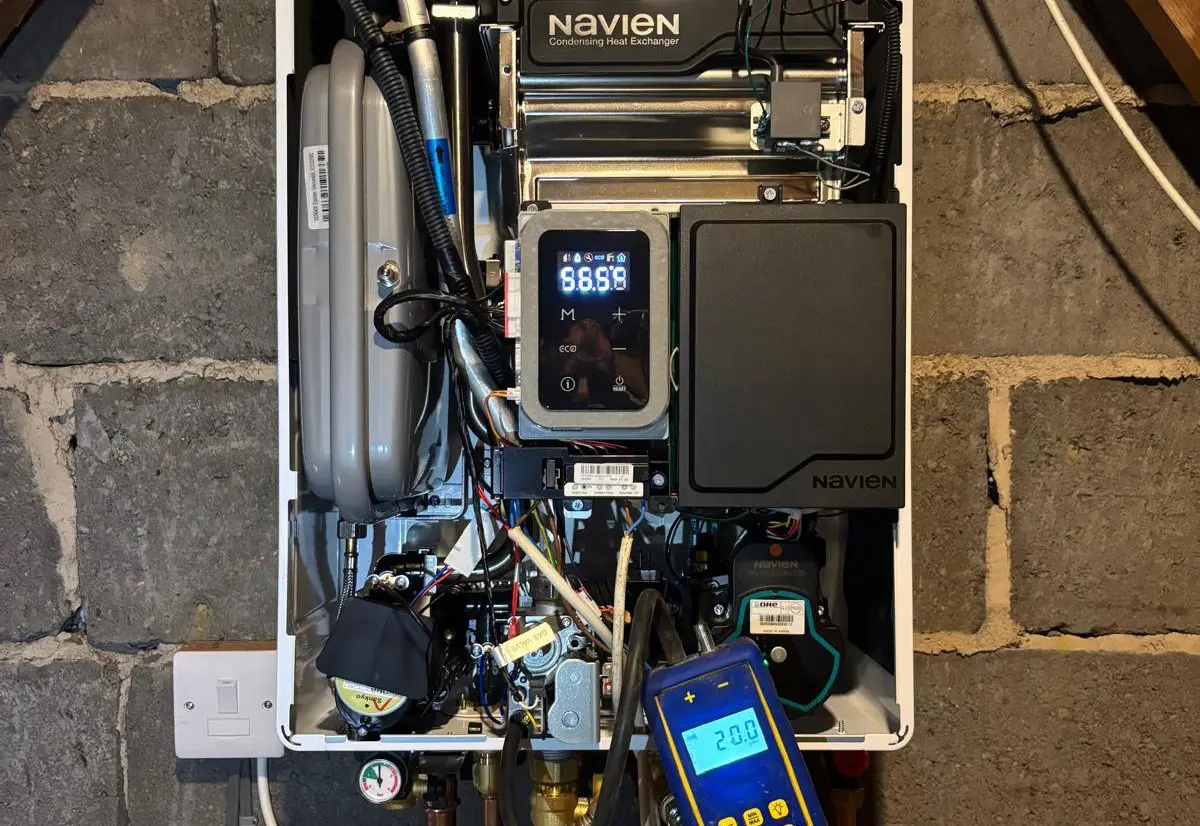
The symptom patterns that point at the valve
There are three patterns worth taking seriously, and Vaillant names the first two directly.
1. Hot water works, radiators stay cold
The valve may be faulty if the hot water taps still work while the radiators do not turn on. The valve has stuck in its hot water position and the heating circuit never gets a look in. This is the classic presentation, and it is genuinely common.
2. Only lukewarm water from the taps
The other listed sign is only being able to get lukewarm water from your taps. Here the valve has not fully swung across, so part of the burner’s output is still leaking away into the heating circuit instead of going to the tap. Warm, never hot, no matter how long you run it.
3. Hot water only when the heating is running
If the taps run properly hot only while the central heating is on, and go tepid the moment the heating satisfies and shuts down, the valve is not seating in either position cleanly. It is the same underlying fault as the second pattern, expressed differently.
The pattern that matters most
A diverter fault is about the relationship between heating and hot water, not about either one failing on its own. If both have stopped together, or both work but are simply not hot enough, look elsewhere first.
What most guides get wrong
Here is the point of view we would want a customer to have before an engineer arrives.
“No heating but the hot water is fine” is treated online as though it were proof of a diverter valve fault. In our day-to-day work it is not. It is a symptom with a queue of cheaper, more likely explanations in front of it, and a good engineer works through that queue before touching the boiler’s internals.
The ones we find most often:
- The room thermostat or programmer. Flat batteries in a wireless stat, a lost pairing, a programmer that has reverted to a factory schedule after a power cut, or simply a summer/winter setting left in the wrong position. Hot water is unaffected by any of these, which is exactly why the fault looks like a diverter problem.
- Thermostatic radiator valves seized shut. After a long summer off, TRV pins stick down. Every radiator stays cold, the boiler seems to be doing nothing for the heating, and the hot water is perfect.
- A seized pump. The circulation pump can stick after months idle. On a combi the hot water can still work because the domestic side does not depend on the pump moving water round your radiators.
- Air or sludge in the system. Covered in our guide to troubleshooting common boiler problems, and cheaper to resolve than a valve replacement.
None of that means the diverter valve is off the hook. It means the valve should be the conclusion of a diagnosis rather than the opening assumption — and if an engineer quotes you for one within thirty seconds of arriving, it is fair to ask what else was ruled out.
Why this is not a DIY job
Reaching a diverter valve means opening the sealed casing of a gas appliance. That is not a grey area in the UK.
The Health and Safety Executive is clear that for a gas engineering business to legally undertake gas work within the scope of the Gas Safety (Installation and Use) Regulations 1998, it must be on the Gas Safe Register. Those regulations exist to prevent gas leaks, fires, explosions and carbon monoxide poisoning — the reasons a boiler casing is sealed in the first place.
There is also a practical reason. Opening the boiler yourself will almost certainly void a manufacturer’s warranty that might otherwise have covered the part outright. It is worth checking your warranty paperwork before authorising any work at all; a boiler under ten years old may well still be covered.
What you can safely do before calling anyone: check the thermostat batteries and programmer settings, confirm the boiler pressure is in its normal range, and check whether your radiator valves are open. Those three checks take five minutes and occasionally solve the whole problem.
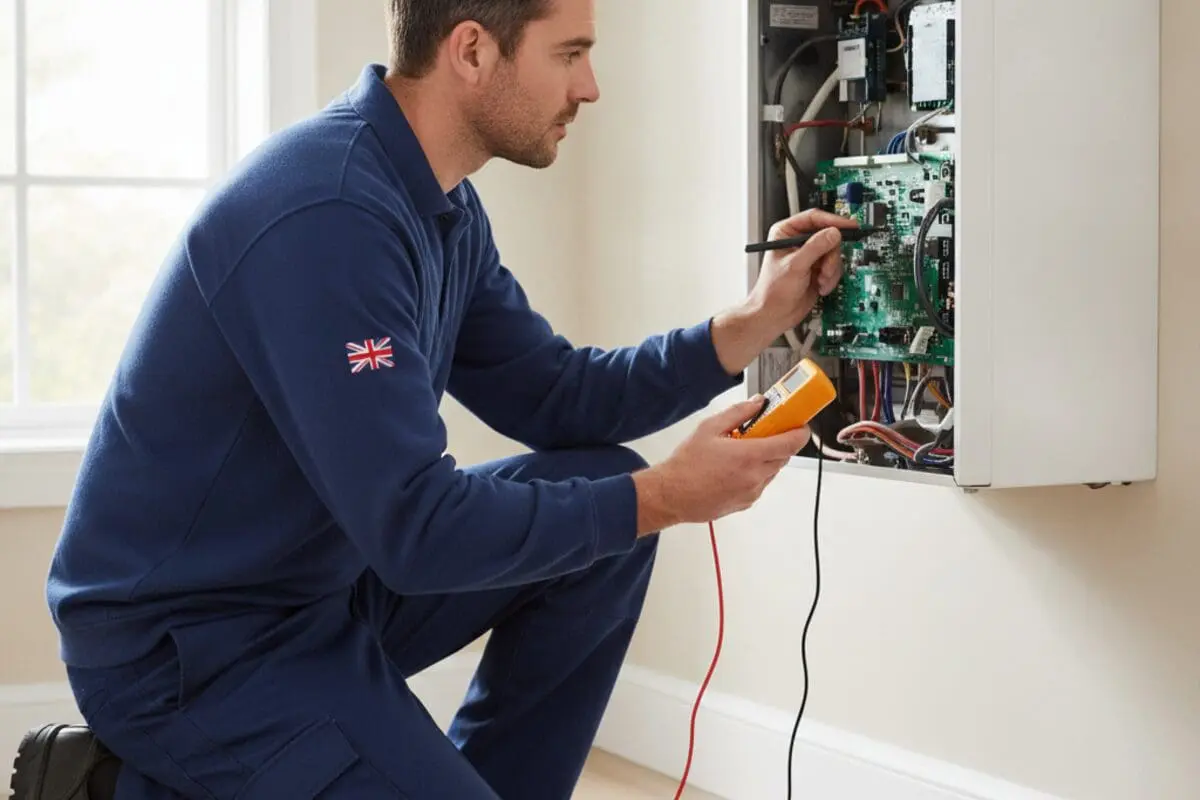
Clean, free off, or replace?
Not every stuck diverter valve needs a new one. An engineer has three realistic options, and which applies depends on what they find when the casing comes off.
The three outcomes
- Freeing it off. Where the valve is mechanically sound but sticking, it can sometimes be worked free and cleaned. Cheapest outcome, but not always durable — if debris put it there once, it can do it again.
- Replacing the cartridge or actuator. On many boilers the wearing parts are a separate cartridge, or the electrical actuator that drives the valve rather than the valve body itself. Replacing just that part is considerably less work than the whole assembly.
- Replacing the complete valve. Where the body is worn or corroded, the whole thing comes out. This is the outcome people mean when they talk about a diverter valve replacement.
There is a fourth consideration that a good engineer will raise. If the valve failed because the system water is full of debris, fitting a clean new valve into dirty water simply restarts the clock. That is when a power flush and a magnetic system filter are worth discussing alongside the repair rather than as an upsell after it.
What drives the cost
We are not going to publish a figure for this, because the honest range is wide enough to be useless as a guide. What is more useful is knowing what moves it:
- Which part actually fails. An actuator or cartridge is a fraction of the cost of a complete valve assembly.
- The boiler make and model. Parts availability and price vary enormously between manufacturers, and older or discontinued models can be the expensive ones.
- Access. A wall-hung combi in a kitchen cupboard is straightforward. One boxed into a loft or a tight airing cupboard is not.
- Whether the system needs cleaning too. If sludge caused the failure, dealing with the cause costs more up front and less over the boiler’s life.
- Warranty cover. The single biggest variable. An in-warranty part may cost you nothing.
Heat365 diagnoses the fault first and gives you a written quotation before any work starts, so you are deciding with a real figure in front of you rather than an internet average.
When it is a sign the boiler is near the end
One diverter valve failure on an otherwise healthy boiler is a repair, and usually a sensible one. A diverter valve failure on a boiler that has already had a pump, a fan and a printed circuit board is a different conversation.
The questions worth asking are how old the boiler is, whether it is still supported by its manufacturer for spares, what it has already cost you in the last two years, and how efficient it is compared with a current model. Our guide on deciding between boiler repair and replacement works through that properly.
The other habit worth forming is annual servicing. A service is where debris in the system, a valve beginning to stick, or a pump starting to labour gets spotted while it is still cheap. It is also, on most boilers, the condition on which the manufacturer’s warranty depends.
Common questions
What are the symptoms of a faulty diverter valve?
Vaillant lists two directly: the hot water taps still working while the radiators do not turn on, and only being able to get lukewarm water from the taps. A third variation is hot water that only runs properly hot while the central heating is on. The common thread is that heating and hot water no longer work independently of each other.
Can I fix a stuck diverter valve myself?
No. Reaching the valve means opening the sealed casing of a gas appliance, and the HSE is clear that gas work within the scope of the Gas Safety (Installation and Use) Regulations 1998 must be carried out by a business on the Gas Safe Register. Doing it yourself would also be likely to void any remaining manufacturer’s warranty on the boiler.
Does every boiler have a diverter valve?
No — only combi boilers do, because a combi uses one heat exchanger for both heating and hot water and needs something to switch between them. A system or regular boiler with a separate hot water cylinder uses motorised zone valves instead, which do a comparable job but are a different part and are usually fitted outside the boiler.
Why do I have hot water but no heating?
A stuck diverter valve is one possible cause, but it is not the most likely one. Flat thermostat batteries, a programmer that has lost its schedule, thermostatic radiator valves seized shut after the summer, and a seized circulation pump all produce exactly the same symptom and are cheaper to put right. A proper diagnosis rules those out before the boiler is opened.
How long does a diverter valve replacement take?
On an accessible wall-hung combi with the part in stock, it is normally a single visit. It takes longer where the boiler is boxed in or in a loft, where the part has to be ordered for an older model, or where the system water needs cleaning at the same time to stop the new valve suffering the same fate.
Can sludge in the system cause a diverter valve to fail?
Yes, and it is one of the common reasons. Debris circulating in the system water works its way into the valve body and stops it moving cleanly. That is why fitting a new valve into an uncleaned system is a short-term fix, and why a system clean and a magnetic filter are worth considering as part of the repair rather than afterwards.