Legionella Risk Assessments for Landlords: What the Law Actually Requires
The Health and Safety Executive states it plainly: health and safety law does not require landlords to obtain or produce a “legionella test certificate”. A landlord legionella risk assessment is a real legal duty. The certificate that gets sold alongside it, for most ordinary rented houses and flats, is not.
In this guide
The short answer
Landlords must assess the risk of legionella exposure in a rented property’s water system, under the Health and Safety at Work Act and COSHH. For most domestic lets the assessment is simple, the landlord can carry it out themselves, and no certificate or water sample is required. The controls are temperature, turnover and clean fittings.
Here is what most guidance on this subject gets wrong: it treats the assessment as a product to be bought. It is a piece of thinking about one specific property, and the moment it is outsourced to a template it usually stops being about that property at all.
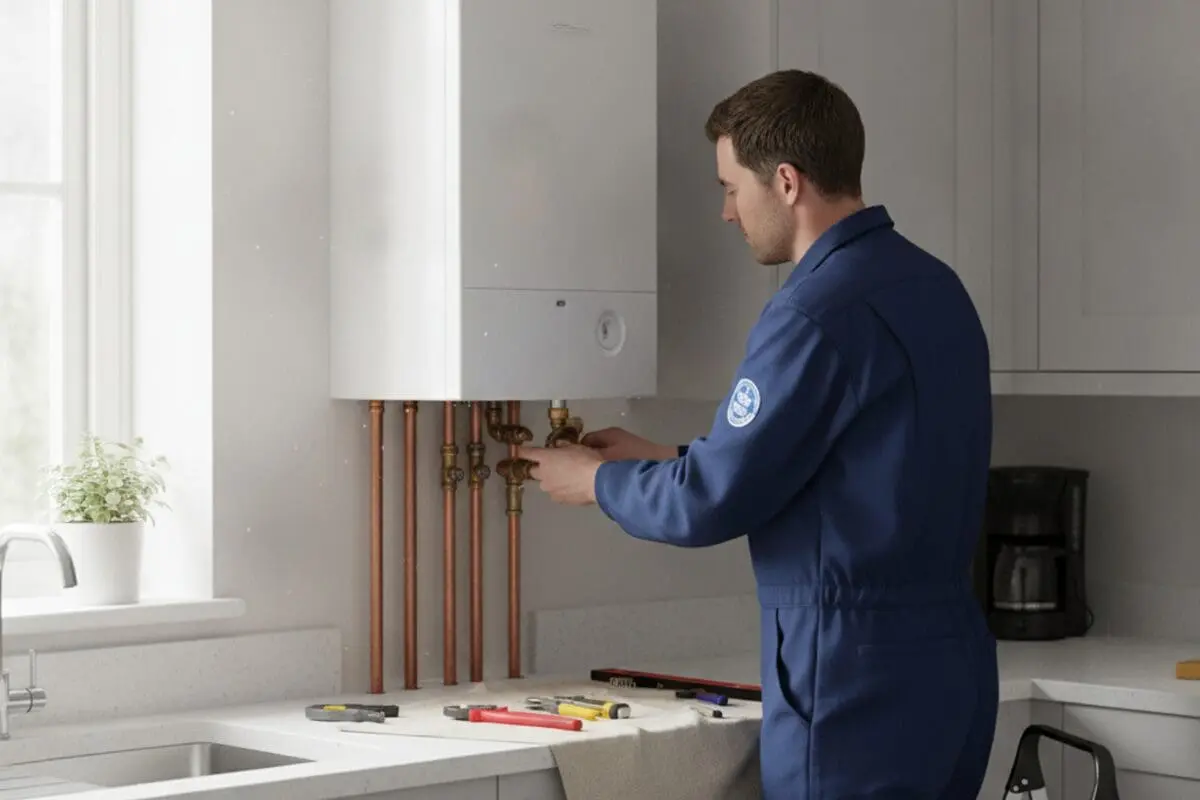
Where the duty actually comes from
There is no “Legionella Act”. The duty is assembled from three existing pieces of law, which is exactly why it is so widely misdescribed.
The Health and Safety at Work Act 1974
Section 3(2) applies health and safety duties to landlords in respect of their tenants. Section 53 treats landlords as self-employed for these purposes. Between them, they mean that letting a property is an undertaking, and you must conduct it so that your tenants are not exposed to health and safety risks.
COSHH
The Control of Substances Hazardous to Health Regulations cover biological agents, and legionella is one of them. COSHH is where the requirement to identify, assess and control the risk actually sits.
The Approved Code of Practice, L8
L8 is the HSE’s Approved Code of Practice on controlling legionella bacteria in water systems. It carries guidance on what the Act and COSHH require of employers and those responsible for premises, including landlords. It is guidance on existing law — it did not create a new obligation, whatever you may have been told when the revised edition appeared.
The point that gets lost
The legislation has not changed. What changed was the marketing around it. The HSE has gone out of its way to say that misreading L8 imposes unnecessary cost on landlords who are being charged for testing and certificates they do not need.
The certificate that isn’t required
This is the single most useful thing a landlord can know, so it is worth stating exactly as the regulator does. The HSE’s guidance on legionella and landlords’ responsibilities confirms that health and safety law does not require landlords to obtain or produce a legionella test certificate, and that testing or sampling water systems is not usually required for domestic hot and cold water systems at all.
It goes further on who may carry out the assessment. In most cases the actions needed are simple and straightforward, so compliance does not need to be burdensome or costly — most landlords can assess the risk themselves and do not need to be professionally trained or accredited. If you do not feel competent to do it, you may of course arrange for someone else to.
None of that makes paid assessments fraudulent. It makes them optional for a straightforward property, and it means you should know what you are buying before you buy it.
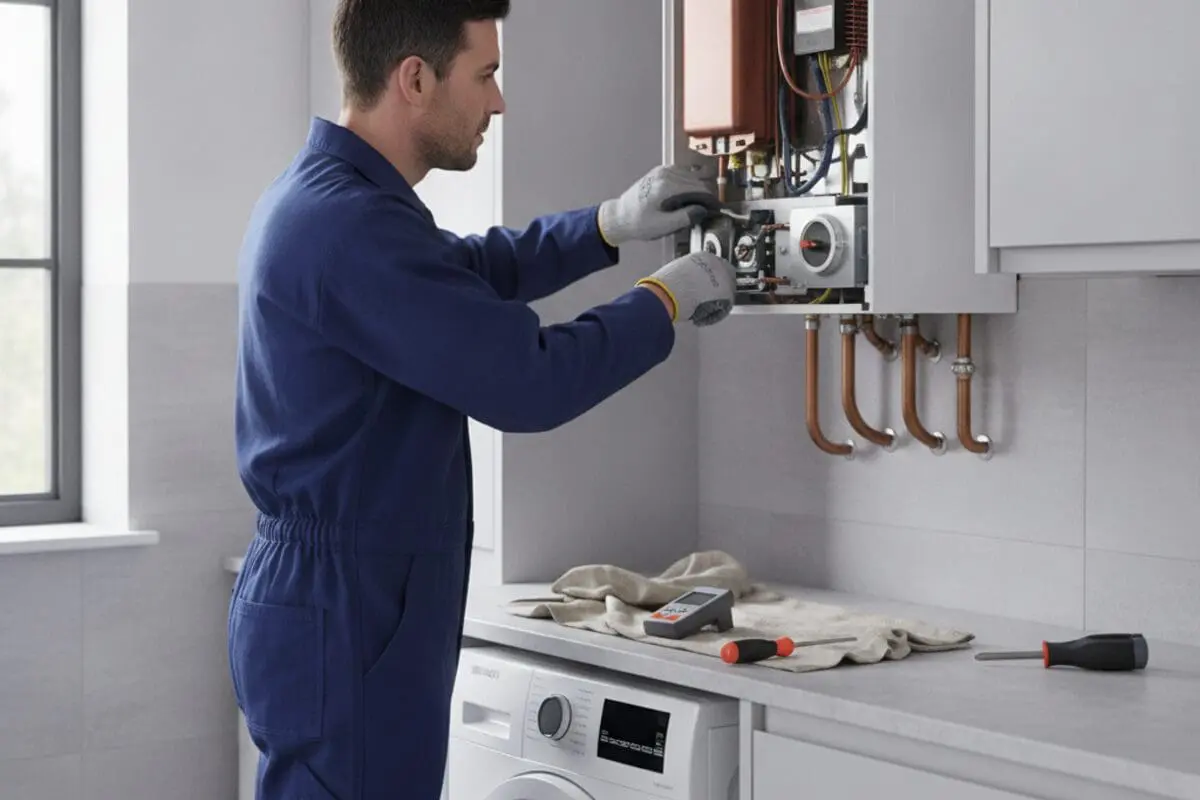
What “low risk” looks like in the HSE’s own words
The regulator describes a typical low-risk example, and it is worth checking your property against it point by point rather than guessing.
- A small building, such as a single housing unit, with small domestic-type water systems.
- Daily water usage that is inevitable and sufficient to turn over the entire system.
- Cold water taken directly from a wholesome mains supply, with no stored water tanks.
- Hot water fed from instantaneous heaters or low-volume water heaters supplying outlets at 50°C.
- Outlets limited to toilets and wash hand basins.
Risk in most residential settings is generally considered low precisely because of that regular usage and turnover. The HSE notes that risk is lowered further where instantaneous water heaters — combi boilers and electric showers — are installed, because there is no water storage at all.
Where a simple assessment shows there are no real risks and they are being properly managed, no further action is needed. That is the regulator’s position, not a shortcut.
The control measures that do the work
For most domestic hot and cold water systems, temperature is the most reliable control. The HSE’s summary is hard to improve on: keep the hot water hot, keep the cold water cold, and keep it moving.
Set the cylinder correctly
Where hot water is stored, the cylinder should be set so water is stored at 60°C. This is the control measure landlords most often get wrong, usually because someone turned it down to save money. If you are unsure what your system is doing, our comparison of stored and instantaneous hot water systems explains which type you have and what it means.
Flush before a let
Flush the system through before the property is let. It is quick, it costs nothing, and it deals with whatever has been standing in the pipework during the changeover.
Keep debris out
Where a cold water tank is fitted, make sure it has a tight-fitting lid. Open or poorly covered tanks are a genuine risk factor in a way that a sealed mains-fed system is not.
Remove redundant pipework
Any redundant pipework identified during the assessment should be removed. Dead legs hold water that never moves and never gets hot, which is the one condition the whole regime exists to prevent. This is real plumbing work rather than paperwork, and it is where a landlord assessment most often turns into a job.
Tell the tenant what to do
Tenants should be advised of any control measures they need to maintain: not to adjust the cylinder temperature, to clean showerheads regularly, and to report promptly if the hot water is not heating properly. Showers create and disperse water droplets that can be inhaled, so a clean, descaled head matters more than it looks.
Where a property stops being simple
The low-risk description above rules a lot of properties out, and honest guidance should say so. The assessment stops being trivial when the property has:
- A cold water storage tank in the loft feeding outlets, rather than direct mains-fed cold water.
- A large or oversized hot water cylinder relative to how much the household actually draws off.
- Long pipe runs, particularly in a converted or extended building where original pipework was left in place.
- Showers or outlets that are used rarely — a second bathroom in a house share, for example.
- Communal water systems serving several units, as in a converted HMO.
None of those makes a property dangerous. They mean the assessment has more to consider than a two-bedroom mains-fed flat, and they are the situations where bringing in a competent person is a reasonable decision rather than an upsell.
The gas side of your obligations runs on entirely separate rules, with its own required paperwork — we cover that in our guide for landlords in Sheffield. Do not let the two get conflated: one genuinely requires a document, and this one does not.
Void periods and empty properties
Stagnation is the risk that grows while nobody is watching. Water must not be left to sit in the system, so properties left empty for extended periods need managing — student accommodation over the summer is the example the HSE itself gives.
The general principle is that outlets on hot and cold water systems should be used at least once a week to maintain a degree of flow. Where a property will stand empty for a long period, consider a documented flushing regime or draining the system down instead.
If you are having a property looked after between tenancies, a weekly flush is a sensible thing to write into the arrangement. It takes minutes and it is the single most effective control available on an unoccupied property.
Records, reviews and the annual myth
Two more points where the commercial version of this duty and the legal version part company.
Recording is not necessarily required. Recording the findings of the assessment is a statutory duty for employers with five or more employees. Most private landlords are not in that position. The HSE nonetheless suggests you may find it wise to keep a record of what has been done for your own purposes — and in a dispute, a dated note costs nothing and proves a great deal.
There is no annual review requirement. The law does not prescribe that the risk assessment be reviewed annually or biennially. It should be reviewed periodically, in case anything changes. A boiler swap, a new cylinder, a loft tank removal, a change of occupancy pattern — those are the triggers, not the calendar.
If a supplier tells you the assessment expires after twelve months, ask which regulation says so. There isn’t one.
Common questions
Do landlords legally need a legionella certificate?
No. The HSE states that health and safety law does not require landlords to obtain or produce a legionella test certificate. What is required is a risk assessment of the water system, together with proportionate control measures. Testing or sampling is not usually needed for domestic hot and cold water systems.
Can a landlord do the legionella risk assessment themselves?
In most cases, yes. The HSE says most landlords can assess the risk themselves and do not need to be professionally trained or accredited, because the actions needed for a typical domestic property are simple and straightforward. If you do not feel competent to do it, you can arrange for someone else to carry it out on your behalf.
How often does a legionella risk assessment need reviewing?
There is no prescribed interval. The law does not require an annual or biennial review. The assessment should be reviewed periodically and whenever something changes in the water system — for example a new cylinder, removal of a storage tank, or a change in how the property is occupied.
What temperature should a rented property’s hot water cylinder be set to?
Where hot water is stored, the cylinder should be set so water is stored at 60°C. Tenants should be told not to adjust it. In the HSE’s low-risk example, hot water fed from instantaneous or low-volume heaters supplies outlets at 50°C.
Does a combi boiler reduce the legionella risk?
Yes. The HSE notes the risk is further lowered where instantaneous water heaters such as combi boilers and electric showers are installed, because there is no stored water for bacteria to multiply in. It does not remove the duty to assess, but it makes the assessment considerably shorter.