Combi Boiler vs System Boiler: What’s the Difference and Which Is Right for Your Sheffield Home?
Reviewed and signed off by Heat365| Published 25 September 2026
When a boiler gives up, or a homeowner moves somewhere with an unfamiliar setup, “combi or system?” is one of the first questions that comes up. Both types are reliable and widely installed across Sheffield — but they work in completely different ways and suit different homes. Getting this wrong means paying more to run, or finding out the hard way that your shower loses pressure whenever someone fills the kettle.
How Each Boiler Type Works
Combi Boiler
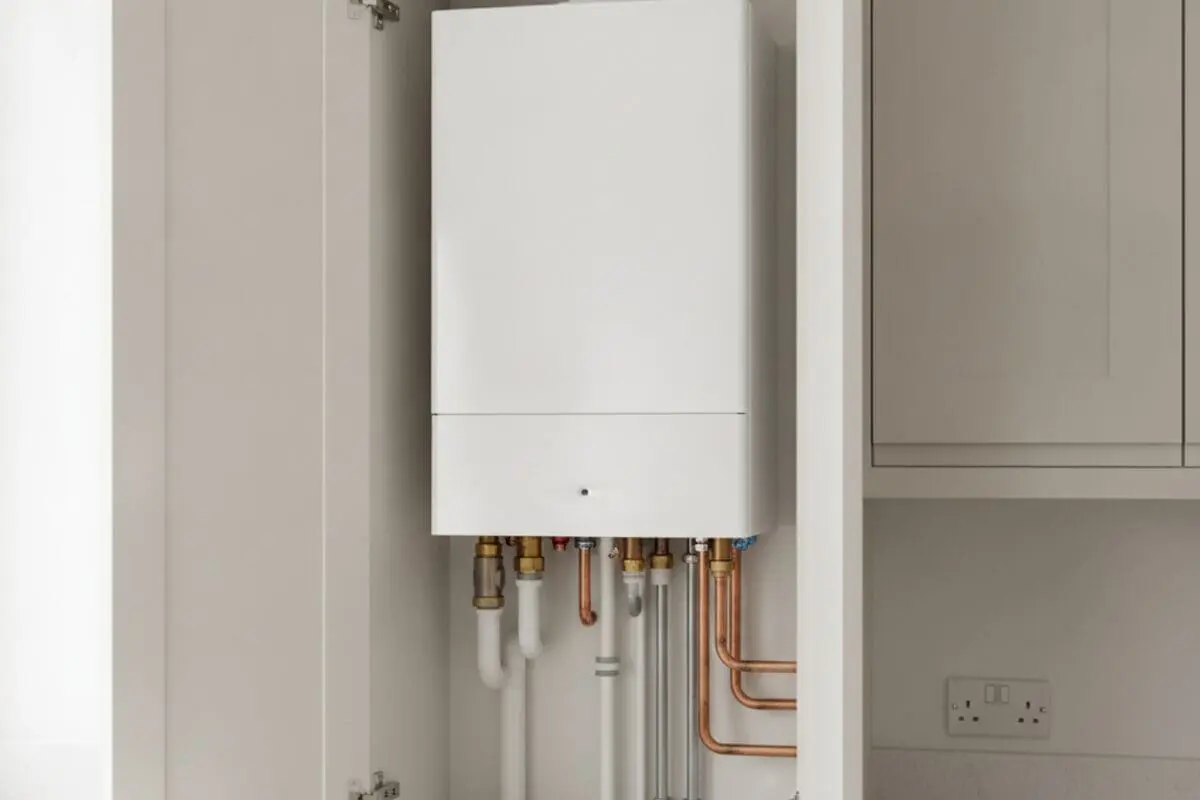
A combi (combination) boiler does two jobs at once: it heats the central heating circuit AND provides hot water at the tap. When you turn on the hot tap, the boiler fires up and heats cold mains water directly — there’s no stored cylinder, no loft tank, just hot water on demand.
This makes combi boilers compact and relatively simple to install. There’s less pipework, no cylinder space to find, and one appliance doing everything. The trade-off is flow rate: a combi can only heat so much water per minute, so if two people try to shower at the same time in separate bathrooms, one of them will notice the drop.
System Boiler
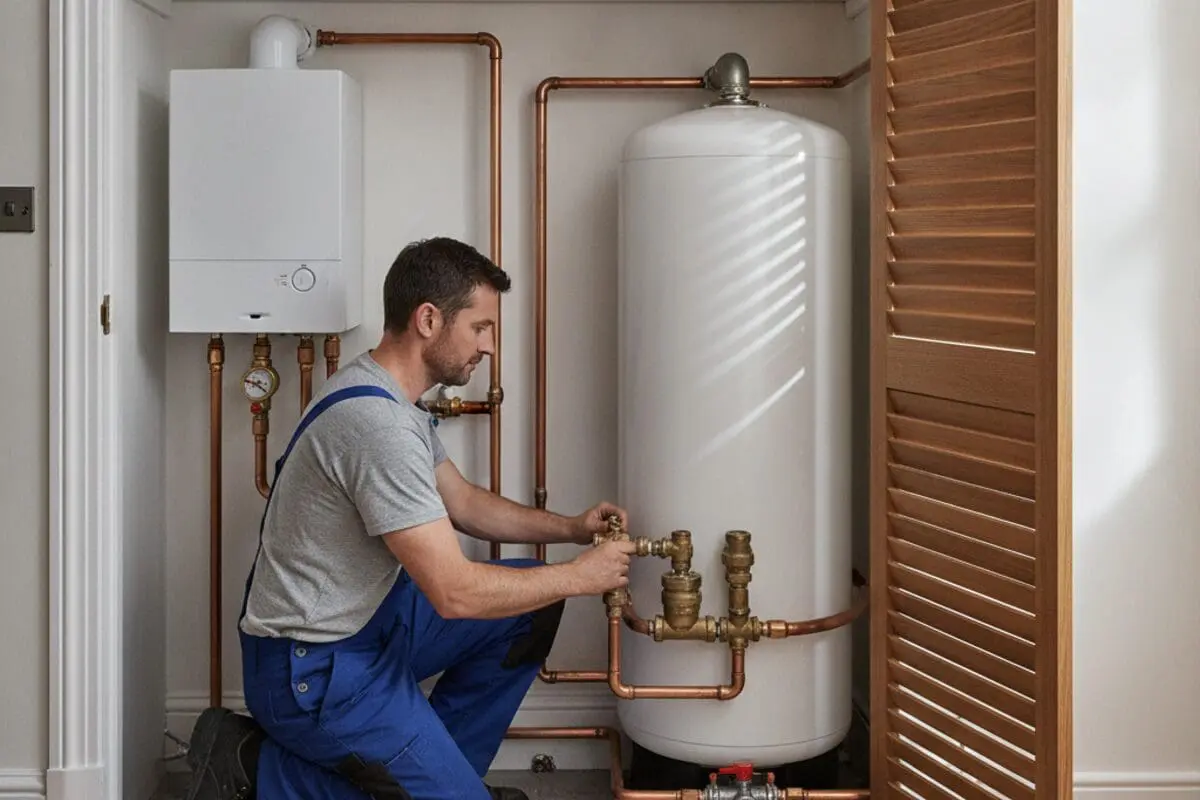
A system boiler heats your central heating in the same way as a combi, but it also heats a separate hot water cylinder — usually in an airing cupboard. The cylinder stores a reserve of hot water (typically 150–210 litres) ready to use whenever you need it.
Because hot water is stored, multiple taps and showers can run simultaneously without any drop in flow. The cylinder does need to reheat after heavy use, which takes 20–40 minutes — but for most families this isn’t a problem in practice.
Combi vs System Boiler: Side-by-Side
| Feature | Combi boiler | System boiler |
|---|---|---|
| Hot water storage | None — on demand | Cylinder (150–210 litres) |
| Loft cold water tank needed | No | No (sealed system) |
| Multiple showers at once | Limited — flow rate drops | Yes — from stored cylinder |
| Installation cost (2026) | From £1,650 | From £2,500 (incl. cylinder) |
| Installation time | ~1 day | 1.5–2 days |
| Space required | Boiler only | Boiler + airing cupboard for cylinder |
| Best for | 1–3 bedrooms, 1 bathroom | 4+ bedrooms, 2+ bathrooms |
| UK market share | ~80% of new installs | ~20% of new installs |
Installation cost data is from Boiler Central’s 2026 combi vs system comparison. Sheffield prices sit broadly in line with the national midpoint for both types.
Which Is Cheaper to Run?
For smaller homes with one bathroom, combi boilers tend to have lower running costs — there’s no standing heat loss from a cylinder sitting warm all day. For larger homes with high hot water demand, the difference narrows significantly, and a well-insulated cylinder is very efficient.
The honest answer is that annual gas bills are mostly driven by how much you heat your home, not by which boiler type you have. What matters far more than combi vs system is the boiler’s efficiency rating — modern A-rated condensing boilers achieve over 90% efficiency regardless of type, compared to 70–80% for boilers more than 15 years old. Replacing an old boiler will save you money; the type is secondary to the efficiency rating.
Which Is Right for Your Sheffield Home?
Choose a combi if: You live in a one- or two-bathroom home, rarely run the shower and a tap at the same time, have no airing cupboard space, and want a simpler installation with lower upfront cost. The vast majority of Sheffield terraces, semis, and two-bedroom flats suit a combi perfectly.
Choose a system boiler if: You have a large family using multiple bathrooms simultaneously, you have an airing cupboard available for a cylinder, or you’re planning to add a second bathroom or shower room. If you’re thinking about underfloor heating across a large floor area, a system boiler also handles the higher flow rate demands better.
Can You Switch Between Types?
Yes — it’s entirely possible to switch from a system boiler to a combi (or vice versa) when replacing your boiler, and many Sheffield homeowners do exactly this. Converting from system to combi means removing the cylinder and any loft tanks, freeing up space but adding a few hours to the installation. Converting from combi to system means adding a cylinder and adapting the pipework.
Either conversion is a straightforward job for an experienced heating engineer. Our team can advise on the best option when you book a boiler installation in Sheffield — we’ll assess your home, your hot water usage, and which type genuinely makes sense for you. We won’t upsell a system boiler to someone whose Sheffield terrace is a textbook combi job.
How Do You Know Which Type You Have Now?
Check your airing cupboard. If there’s a large cylinder (usually copper or white), you have a system boiler. If there’s no cylinder anywhere and hot water arrives directly from the boiler when you turn on a tap, you have a combi. You can also look at the boiler casing — the model name usually makes the type clear, or any Gas Safe engineer can confirm it in a few seconds.
Not sure which boiler type is right for your home?
Call Heat365 on 07534 793949 (24/7) for a free chat. We install combi and system boilers across Sheffield, Rotherham, Barnsley, Chesterfield, Doncaster and Worksop. Get a boiler installation quote →
Frequently Asked Questions
What is the main disadvantage of a combi boiler?
The main limitation is flow rate — a combi can only heat so much water per minute, which is usually enough for one shower or bath at a time. If two people shower simultaneously in different bathrooms, one will notice a drop in temperature or pressure. For homes with two or more bathrooms regularly used at the same time, a system boiler with stored hot water is a better fit.
Can you switch from a system boiler to a combi boiler?
Yes. Switching from system to combi means removing the hot water cylinder and any loft cold water tanks, then fitting the new combi unit. The freed-up cylinder space becomes useful storage. The job typically takes one to one-and-a-half days for an experienced Gas Safe registered heating engineer. Going the other way — combi to system — requires adding a cylinder and adapting the pipework, and takes slightly longer.
How do I know if I have a combi or system boiler?
Check for a cylinder in your airing cupboard. If there’s a large tank (usually copper or white), you have a system boiler. If there’s no cylinder anywhere and hot water arrives directly from the boiler unit when you turn on a tap, you have a combi. The model name on the boiler casing will also usually specify the type.
Which boiler type is cheaper to run?
For most Sheffield homes with one bathroom and moderate hot water use, combi boilers are marginally cheaper to run — no cylinder means no standing heat loss. For large families using multiple taps and showers frequently, the difference narrows. What matters far more than the type is the boiler’s efficiency rating — modern A-rated condensing boilers achieve 90%+ efficiency regardless of whether they’re combi or system.