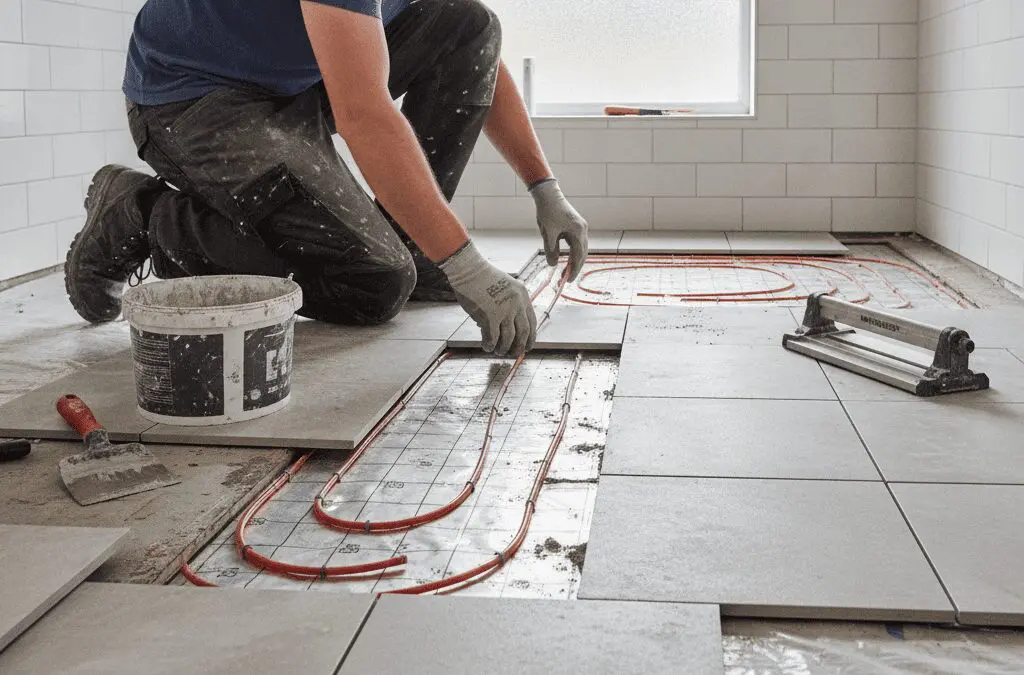
Can You Add Underfloor Heating to an Existing House? A Sheffield Guide
Underfloor heating is no longer just for new builds. Thousands of Sheffield homeowners are retrofitting underfloor heating into existing properties — from Victorian terraces to 1970s semis. This guide explains your options, what to expect, and the honest costs involved.
Can You Really Add Underfloor Heating to an Existing House?
Yes — and it’s more common than most people realise. Retrofitting underfloor heating to an existing house in Sheffield is entirely possible, though the right approach depends on your floor type, your existing heating system, and your objectives.
The two main routes are:
- Electric underfloor heating (dry system) — a mat or cable laid beneath floor tiles or other hard flooring. Low profile, relatively quick to install, no pipework required.
- Wet underfloor heating (hydronic system) — water pipes run through the floor and connected to your boiler or heat pump. More efficient to run long-term, but more involved to install.
The key question is not whether underfloor heating is possible in your Sheffield home — it almost certainly is — but which system suits your property and priorities.
Heat365 tip
If you’re planning a bathroom renovation, kitchen refit, or extension, it’s significantly cheaper and easier to add underfloor heating during the build phase than to retrofit it later. Tell us at the initial consultation and we can factor it in from the start.

Wet System vs Electric System: Which Is Right for Your Sheffield Home?
The choice between wet (hydronic) and electric underfloor heating comes down to the size of the area, how you heat your home, and how much disruption you’re willing to accept.
Electric underfloor heating
Electric systems use a heating mat or loose cable installed directly beneath the floor covering. They’re ideal for bathrooms, en-suites, and smaller wet rooms, kitchens and utility rooms, and single rooms being renovated where the floor is being lifted. Electric systems are inexpensive to install — typically £400–£800 for a bathroom including the thermostat — but the running costs are higher than wet systems because electricity is more expensive than gas per kilowatt hour.
Wet underfloor heating
Wet systems circulate warm water through a network of pipes beneath the floor. They’re more efficient to run, especially when paired with a modern condensing boiler or heat pump, but require more installation work. Pipes are embedded in screed or a low-profile overlay system, and a manifold connects the underfloor pipes to your boiler. Wet systems work best for larger areas — open-plan living spaces, ground floors, or whole-house installations.
A simple comparison
- Electric: lower install cost, higher running cost, minimal floor depth added
- Wet: higher install cost, lower running cost, more involved installation
For a bathroom or single room in a Sheffield terrace, electric is usually the right answer. For an open-plan ground floor, a wet system repays the higher installation cost within a few years.
Floor Types and Suitability
Your existing floor type will shape which underfloor heating system works best and whether any preparatory work is needed.
Solid concrete floors
Excellent candidates for wet underfloor heating. Pipes can be embedded in a new screed layer, or a low-profile system can be used if floor height is a concern. Concrete floors also retain heat well, which improves efficiency.
Timber suspended floors
Very common in Sheffield’s Victorian and Edwardian terraces. Wet underfloor heating can be fitted between or beneath the joists using a spreader plate system. Electric systems can be installed above the boards under a new floor covering. The main consideration is the air gap beneath the floor — insulation beneath the pipes addresses this.
LVT, engineered wood, and laminate
Most modern LVT and engineered wood products are compatible with underfloor heating — check the manufacturer’s specification for maximum surface temperature limits. Standard laminate is generally not recommended with wet systems unless specifically rated for it.
Floor height matters
A wet screed system adds 75–100mm to your floor level. A low-profile overlay system adds around 15–20mm. Electric mats add as little as 3–4mm. In Sheffield homes with low ceilings or door clearance concerns, the system choice may be partly determined by how much floor height you can afford to lose.
Retrofit Underfloor Heating Costs in Sheffield
Costs vary significantly depending on the system type, room size, and whether any existing flooring needs to be lifted or replaced. The figures below are for a complete supply-and-install job in Sheffield in 2026.
Electric underfloor heating
- Bathroom (5–7m²) — typically £450–£800 including thermostat
- Kitchen (12–16m²) — typically £700–£1,200 including thermostat
- Open-plan room (25–35m²) — typically £1,200–£2,500
Wet underfloor heating (retrofit)
- Single ground floor room (20–25m²) — typically £2,000–£3,500 including manifold and screed or overlay system
- Full ground floor (50–70m²) — typically £5,000–£9,000 including all zones, manifold, and boiler modifications if required
- Whole-house retrofit — from £12,000 upwards depending on size and access complexity
Heat365 provides a written quote for your specific property after an on-site assessment.
What the Installation Process Looks Like
For an electric system in a bathroom
- Existing floor lifted (if needed) or existing tiles removed
- Heating mat unrolled and laid on the subfloor
- Thermostat sensor cable laid through the mat
- Thermostat fitted on the wall and wired to a dedicated circuit
- Mat covered with adhesive and tiles laid on top
- System tested before grouting
In most bathrooms, this adds no more than half a day to the tiling work.
For a wet system retrofit on a timber floor
- Floorboards lifted and insulation installed between joists
- Spreader plates and pipes positioned beneath the floor
- Manifold installed and connected to the boiler
- System pressure-tested and balanced
- Floorboards or new floor covering refitted
- Thermostat zones set up and tested
A single room might take two to three days. A full ground floor installation will typically take one to two weeks including any screed cure time.
Which Rooms Work Best for Retrofit Underfloor Heating?
Bathrooms and en-suites are the most popular choice for retrofit UFH in Sheffield. Warm tiles underfoot are an immediate quality-of-life improvement. Electric mats are the usual solution here and can be fitted during any bathroom refurbishment.
Kitchens are a great candidate, especially during a kitchen renovation when the floor is already being lifted. Hard floor surfaces — tile, stone, LVT — are ideal for underfloor heating.
Open-plan living areas are where wet underfloor heating shines. The floor becomes the primary heat emitter, freeing walls from radiators and creating a more even temperature throughout the room.
Ground floor rooms are the most cost-effective for wet underfloor heating retrofits because the pipes don’t have to be routed through multiple floors, and concrete ground floors are particularly well-suited to the system.
FAQs — Underfloor Heating in Existing Sheffield Homes
Will my existing boiler work with underfloor heating?
In most cases, yes. Modern condensing boilers are well-suited to underfloor heating because the system runs at lower flow temperatures (35–50°C) than traditional radiator systems (70–80°C), which is actually more efficient. Heat365 will assess your boiler as part of the underfloor heating design.
Can I keep my radiators alongside underfloor heating?
Yes — mixed systems are very common. Many Sheffield homeowners add underfloor heating to a bathroom or kitchen while retaining radiators in other rooms. Both can run off the same boiler, with the underfloor heating controlled independently via its own thermostat zone.
How long does underfloor heating take to warm a room?
Electric systems heat up quickly — typically 20–30 minutes — and work best with a timer set before you need them. Wet systems in a screed floor take longer (1–2 hours to reach temperature) but stay warm longer, so they’re often left on a lower setpoint rather than switched on and off like radiators.
Is underfloor heating suitable for upstairs rooms in Sheffield terraces?
Yes, though the access is more complex on suspended timber floors. Electric systems are typically the easier choice upstairs. Wet systems can be retrofitted using a low-profile overlay system that doesn’t require lifting the full floor.
How do I get started?
Call Heat365 on 07534 793949. We’ll visit your Sheffield home, assess the floors and existing heating, and give you a clear written quote with no obligation.