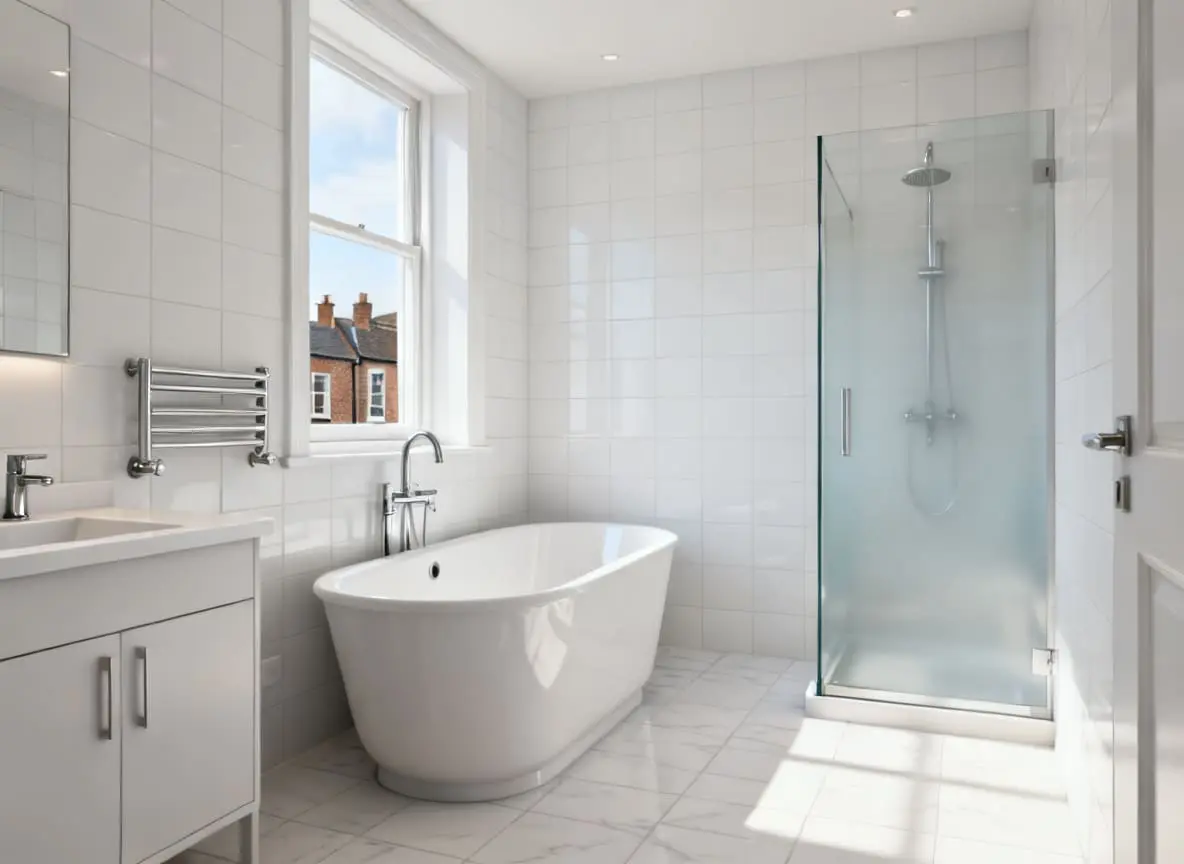
Getting a new bathroom fitted is a significant job — and knowing what to expect at each stage makes the whole process much less stressful.
This guide walks you through every stage of a bathroom installation in Sheffield, from the first survey to the final sign-off, so you know exactly what is involved.
How long does a bathroom installation take?
A standard bathroom installation in Sheffield typically takes between three and seven working days. The exact timeline depends on how complex the work is, how much of the existing bathroom needs to be stripped out, and whether any structural changes or extra plumbing work are needed.
A straightforward like-for-like bathroom replacement — where the toilet, basin, and bath stay in roughly the same positions — can sometimes be completed in three to four days. If you are moving plumbing, adding an en-suite, or working with a particularly challenging layout, expect the job to take longer.
Rough timeline guide
- Simple replacement (same layout): 3–5 days
- Mid-range refit (new layout, no structural work): 5–7 days
- Full renovation (moved plumbing, wet room, complex tiling): 7–14 days
Your installer should give you a realistic timeline before work begins and flag any factors that might extend it — such as waiting for tiles, specialist sanitary ware, or building inspection sign-off.
The stages of a bathroom installation
1. Survey and quote
Before any work begins, a good bathroom installer will visit your property to assess the existing bathroom. They check the current plumbing layout, drainage, wall and floor conditions, ventilation, and any electrical work that may be needed. This visit lets them give you an accurate quote rather than a rough estimate that changes later.
Use this meeting to be clear about what you want. Bring photos, product links, or a rough idea of the style you are after. A clear brief helps avoid costly changes mid-job.
2. Design decisions and product selection
Once you have agreed on a quote, you will need to select your sanitaryware, tiles, fixtures, and fittings. Some bathroom fitters supply products as part of a package; others expect you to source them yourself.
Agree on all product choices before work starts. Delays caused by items being out of stock or delivered late are one of the most common reasons bathroom installations run over schedule.
Tip: confirm delivery dates early
Bespoke tiles, specialist bath panels, and certain sanitaryware can take several weeks to arrive. Place orders as soon as your quote is confirmed so your installer is not waiting around on delivery day.
3. Strip-out and first fix
The first stage of the actual installation is stripping out the existing bathroom. The old bath, toilet, basin, and any fitted furniture are removed. Tiles are taken off the walls and floor if needed. This can generate a fair amount of dust and noise, particularly if wall tiles are being removed with power tools.
Once the room is cleared, the plumber carries out the first fix — laying new pipework, adjusting drainage positions, and roughing in the water supply connections for the new sanitaryware. If an electrician is involved, they will also do their first fix at this stage, running cables for lighting, heated towel rails, shaver sockets, and extractor fans.
4. Tanking, plastering, and tiling
Before tiles go up, wet areas are tanked — a waterproof membrane is applied to walls and sometimes the floor to prevent damp from penetrating through grout lines. This is a step that is easy to skip but important to get right. In wet rooms and walk-in showers especially, tanking is non-negotiable.
Any walls that needed patching or replastering after the strip-out will need time to dry before tiles can go on. Most plasterers recommend allowing at least a week before tiling, though finishing plaster can sometimes be tiled sooner depending on conditions.
Tiling is often the most time-consuming part of a bathroom installation. Intricate tile patterns, large-format tiles, or awkward layouts all add time. A tiler working on a standard bathroom suite can typically tile walls and floor in two to three days.
5. Second fix — fitting the sanitaryware
With the tiling complete, the plumber returns to carry out the second fix. This is where the bath, toilet, basin, and shower are connected and made fully operational. Radiators or heated towel rails are hung. The electrician also returns to fit light fittings, switches, and extractor fans.
Accessories such as mirrors, shelving, toilet roll holders, and towel hooks are usually fitted at this stage too. Any sealant around the bath, shower tray, or basin is applied and left to cure.
6. Final check and sign-off
A professional bathroom installer will carry out a final walk-through with you before considering the job complete. They should check that all fixtures are correctly fitted, that there are no visible gaps in sealant or grout, that hot and cold water run correctly, and that the toilet flushes and fills without leaks.
Any electrical work should be signed off by a qualified electrician and a certificate issued. If the work triggers a Part P notification, this will need to go to the local building control authority.
What disruption to expect
A bathroom installation will disrupt your home — there is no getting around it. Here is what is normal:
- Noise from drilling, tiling, and power tools — especially during strip-out and tiling stages
- Dust, particularly if walls or floors are being chased for new pipework or cables
- Loss of use of the bathroom being worked on — usually for the full duration of the job
- Short periods without water if the main water supply needs to be isolated
- Tradespeople in and out of your home, which means access is needed during agreed working hours
Most installers will keep dust to a minimum by sheeting doorways and hoovering regularly, but some mess is inevitable. Laying dust sheets in the hallway and on stairs helps protect flooring.
Do you need to move out during a bathroom installation?
In most cases, no. If your property has more than one toilet, you will still have access to basic facilities throughout the job. If there is only one bathroom, your installer should factor this into their schedule — many will try to get the toilet functional each evening even if the room is not finished.
If you have young children, limited alternative facilities, or simply do not want to deal with the disruption, staying with family for a few days during the main installation phase is a practical option. Discuss this with your installer before work begins.
Single bathroom properties
If your home only has one toilet, ask your installer about keeping basic access as part of their daily schedule. A good installer will plan the work to minimise the time you are without a functioning toilet.
How to prepare before work starts
A little preparation before your bathroom installation begins can make the whole job run more smoothly:
- Clear the bathroom of all personal items — toiletries, towels, medicines, and any storage units that are not being replaced
- Protect any carpets or flooring in adjacent rooms with dust sheets
- Confirm all product deliveries are scheduled before the start date
- Know where your stopcock is — your installer may need to isolate the water supply at short notice
- Agree a plan for toilet access if there is only one bathroom in the property
- Make sure someone is available to let tradespeople in and answer questions on the day
What to look for in a bathroom installer in Sheffield
Choosing the right bathroom fitter makes a significant difference to the quality of the finished result. Here is what to look for when comparing installers in Sheffield:
- Gas Safe registration — essential if your bathroom includes a boiler or gas appliance
- Part P certification — required for any electrical work in the bathroom
- A clear written quote — breaking down labour, materials, and any likely extras
- References or reviews — ask for examples of completed bathroom installations or check online reviews
- Clear communication — a good installer answers questions clearly, keeps you updated, and flags any issues promptly
- A realistic timeline — be cautious of installers who promise unusually fast completion times without being able to explain how
It is also worth checking whether your installer carries out all trades in-house or subcontracts tiling, plastering, or electrical work. Either approach can work, but you should know who will be on site and who is responsible for the overall quality of the job.
Get a quote for bathroom installation in Sheffield
Heat365 carries out bathroom installations and bathroom fitting across Sheffield and surrounding areas including Rotherham, Barnsley, Doncaster, Chesterfield, and Worksop. We handle the full project — from the initial survey and first fix plumbing through to tiling, sanitaryware fitting, and final sign-off.
Whether you are looking for a straightforward bathroom replacement or a full renovation, we can visit your property, assess what is involved, and give you an honest quote with a clear timeline.
Visit our bathroom renovation page or our bathroom fitting page for more details, or get in touch directly.
Frequently asked questions
How much does a bathroom installation cost in Sheffield?
Costs vary considerably depending on the size of the bathroom, the fixtures chosen, and how much structural or plumbing work is involved. A basic like-for-like replacement typically starts from around £2,000–£3,500. A full bathroom renovation with moved plumbing and full tiling can cost significantly more. For an accurate figure for your property, a site visit and written quote is the best starting point.
Can I supply my own bathroom products?
Yes — many homeowners source their own sanitaryware and tiles. Let your installer know in advance so they can confirm the products are compatible and suitable. Be aware that if you supply products that turn out to be faulty or unsuitable, responsibility for the product itself generally stays with you.
Do I need planning permission for a new bathroom?
In most cases, no. Replacing a bathroom or fitting a new one in an existing space does not usually require planning permission. Some exceptions apply — for example, if you are converting a bedroom into a bathroom in a listed building, or if your property is in a conservation area. Your installer can advise if your project is likely to need formal approval.
What warranty should I expect on bathroom installation work?
A reputable installer should offer a workmanship guarantee on the labour they carry out. Product warranties come separately from the manufacturer. Ask about this before work begins and get any guarantees in writing.
Can Heat365 remove my old bathroom suite?
Yes. Strip-out and removal of the existing bathroom is part of the installation process. Your old sanitaryware and tiles will be removed and disposed of responsibly as part of the job.
For a complete breakdown of what to budget, read our guide to shower installation costs in Sheffield — covering electric, thermostatic, and walk-in options.